
The evaluation of hal' cases and the hal' fatwas in the Ottoman Empire in terms of Islamic law (XVII - XX. centuries)
2024
1 views
0 downloads
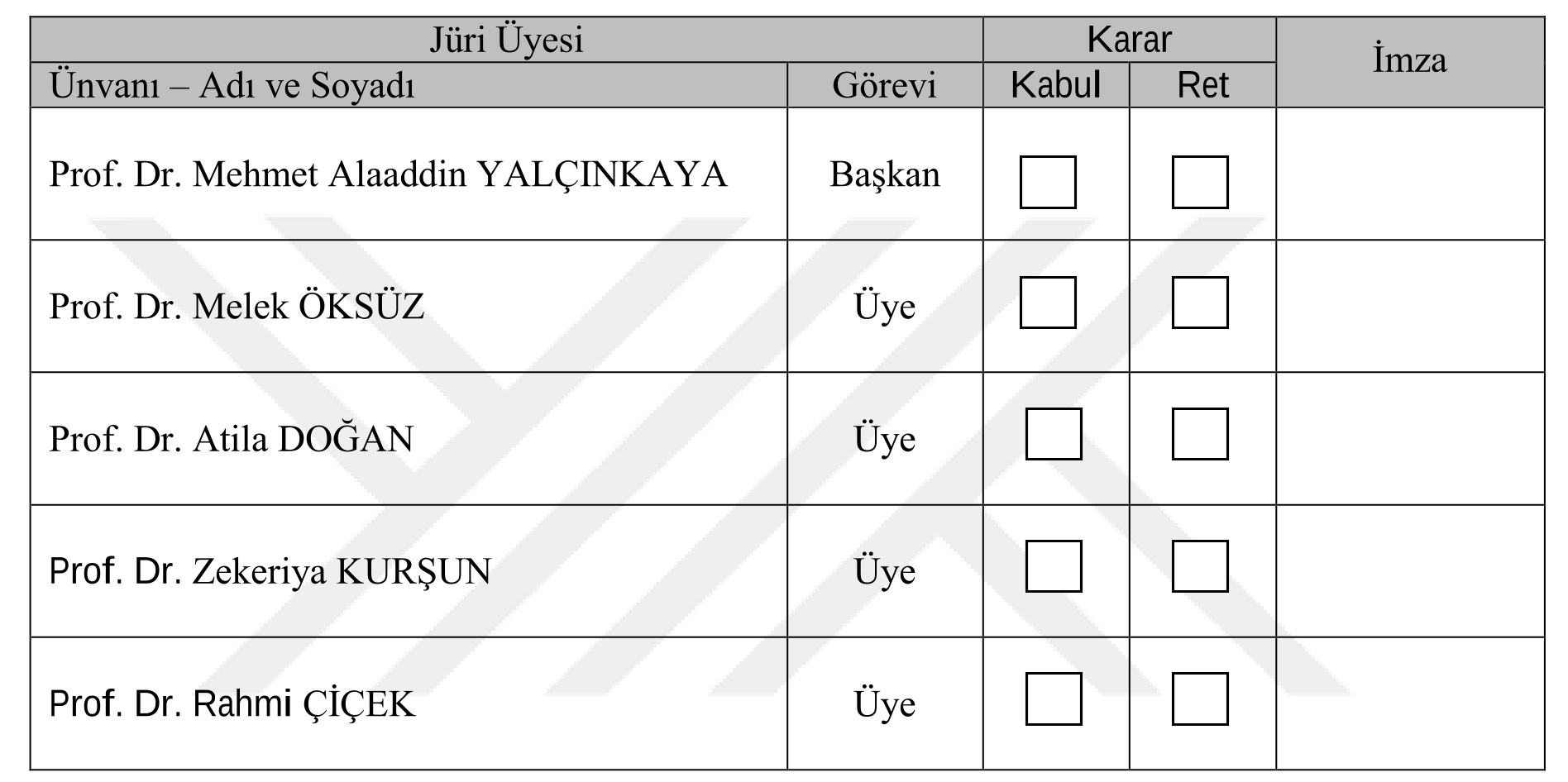
Advisor: Prof. Dr. Mehmet Alaaddin Yalçınkaya
Abstract (EN)
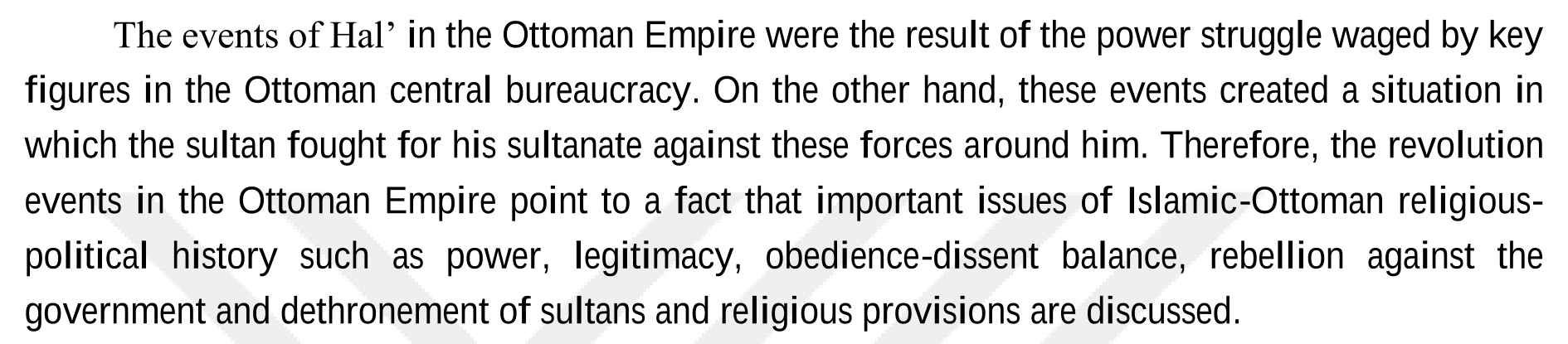
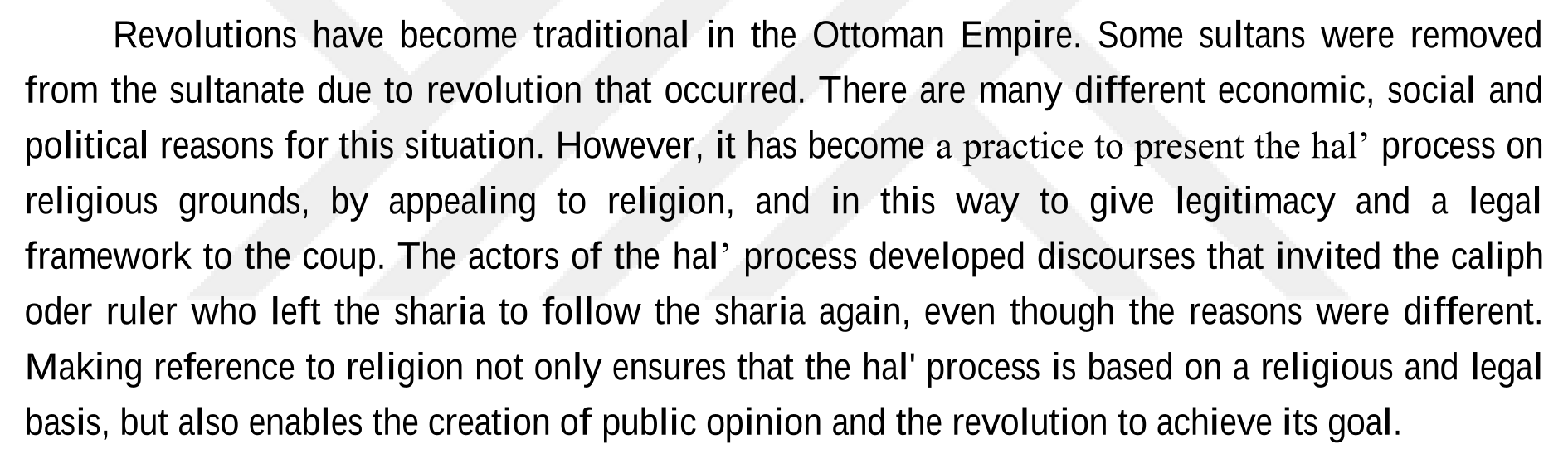
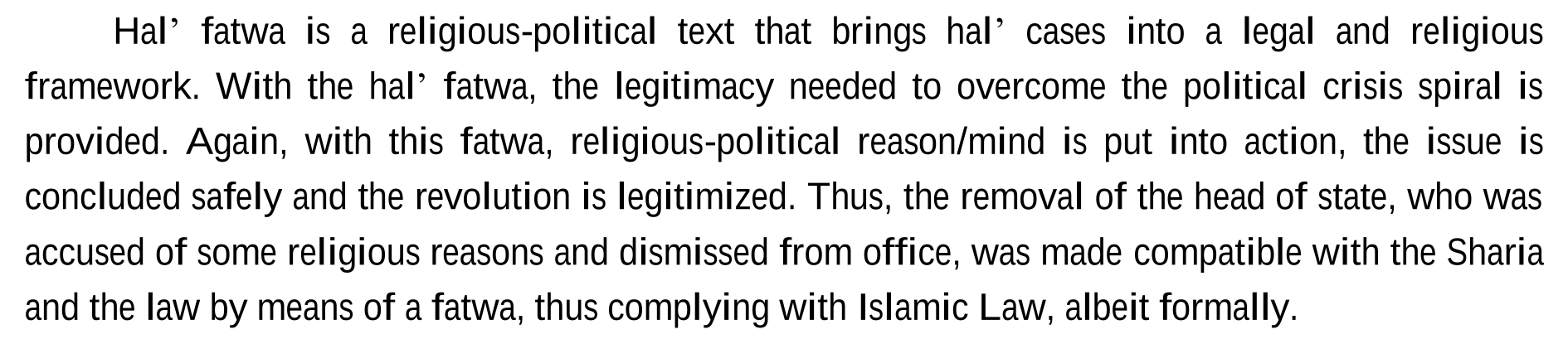
This study focuses on the revolutions that occurred in the Ottoman Empire after the 17th century and the fatwas that legitimized this revolution process. It is also discussed whether the reasons put forward in these fatwa texts are religious reasons. The events of Hal' in the Ottoman Empire were the result of the power struggle waged by key figures in the Ottoman central bureaucracy. Therefore, the revolution events in the Ottoman Empire point to a fact that important issues of Islamic-Ottoman religious-political history such as power, legitimacy, obedience-dissent balance, rebellion against the government and dethronement of sultans and religious provisions are discussed. Revolutions have become traditional in the Ottoman Empire. Some sultans were removed from the sultanate due to revolution that occurred. There are many different economic, social and political reasons for this situation. However, it has become a practice to present the hal' process on religious grounds, by appealing to religion, and in this way to give legitimacy and a legal framework to the coup. The actors of the hal' process developed discourses that invited the caliph oder ruler who left the sharia to follow the sharia again, even though the reasons were different. Making reference to religion not only ensures that the hal' process is based on a religious and legal basis, but also enables the creation of public opinion and the revolution to achieve its goal. Hal' fatwa is a religious-political text that brings hal' cases into a legal and religious framework. With the hal' fatwa, the legitimacy needed to overcome the political crisis spiral is provided. Again, with this fatwa, religious-political reason/mind is put into action, the issue is concluded safely and the revolution is legitimized. Thus, the removal of the head of state, who was accused of some religious reasons and dismissed from office, was made compatible with the Sharia and the law by means of a fatwa, thus complying with Islamic Law, albeit formally.
Author
Dr. Ahmet Akkuş
Institution

How to Cite
Ahmet Akkuş (Doctorate thesis). The evaluation of hal' cases and the hal' fatwas in the Ottoman Empire in terms of Islamic law (XVII - XX. centuries), 2024, Karadeniz Technical University.
Figures & Images (446)


Keywords
License
Tüm Hakları Saklıdır
This work is shared under the specified license terms.
More theses from Karadeniz Technical University
- Optimization of gold recovery from placer deposits using gravity methods(2025)
- Harşit çayından (Tirebolu-Giresun) elde edilen kırılmış dere malzemesinin beton agregası olarak kullanılabilirliğinin incelenmesi(2005)
- Yaşlandırma Süresinin Zn-27Al-1Cu Alaşımının Yapı ve Mekanik Özelliklerine Etkisi(2016)
- Prevalence and associated factors of tobacco use, alcohol consumption, alcohol use disorder among individuals aged 20 and above living in trabzon province(2025)
- Trabzon güney çevre yolu güzergahı Darıca (Akçaabat) - Yalı mahallesi (Trabzon) arasının mühendislik jeolojisi / Investigation of the planned route of the southern highway between Darıca (Akçaabat) - Yalı mahallesi (Trabzon) in terms of engineering geolog(2001)
- EXPERIMENTAL AND NUMERICAL INVESTIGATION OF FATIGUE BEHAVIOUR IN RADIAL JOURNAL BEARINGS MANUFACTURED FROM ZA-27 ALLOY(2025)