
Computer aided calculation of thermodynamic properties and formation of tables and diagrams of refrigerants
1992
0 views
0 downloads
Advisor: Doç. Dr. Cem Parmaksızoğlu
Abstract (EN)
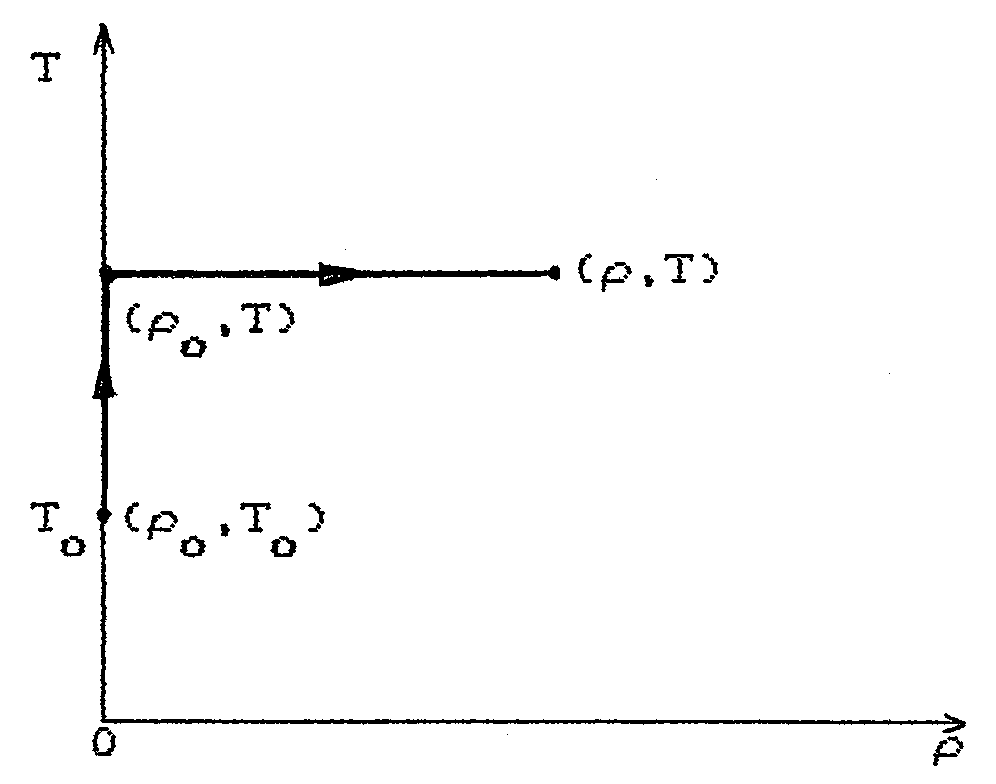
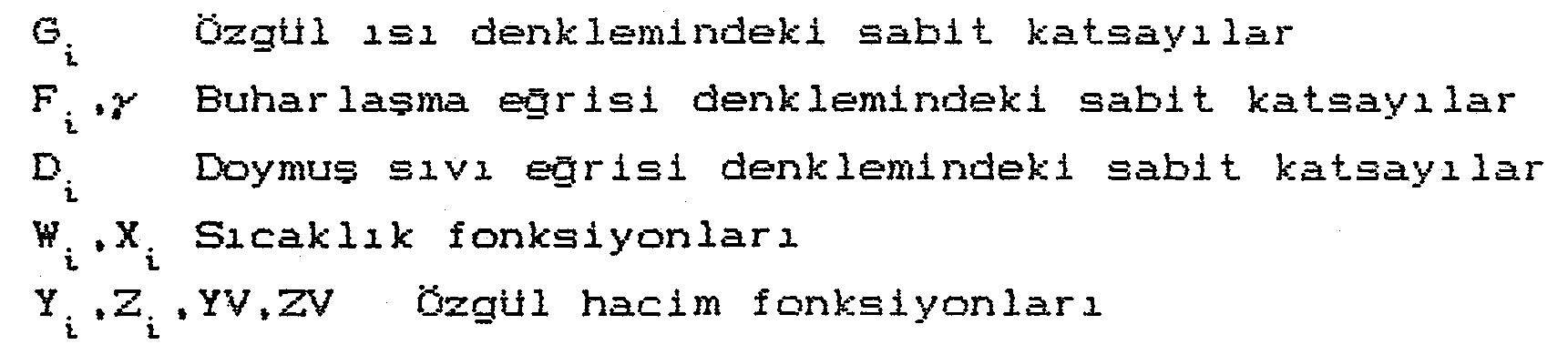
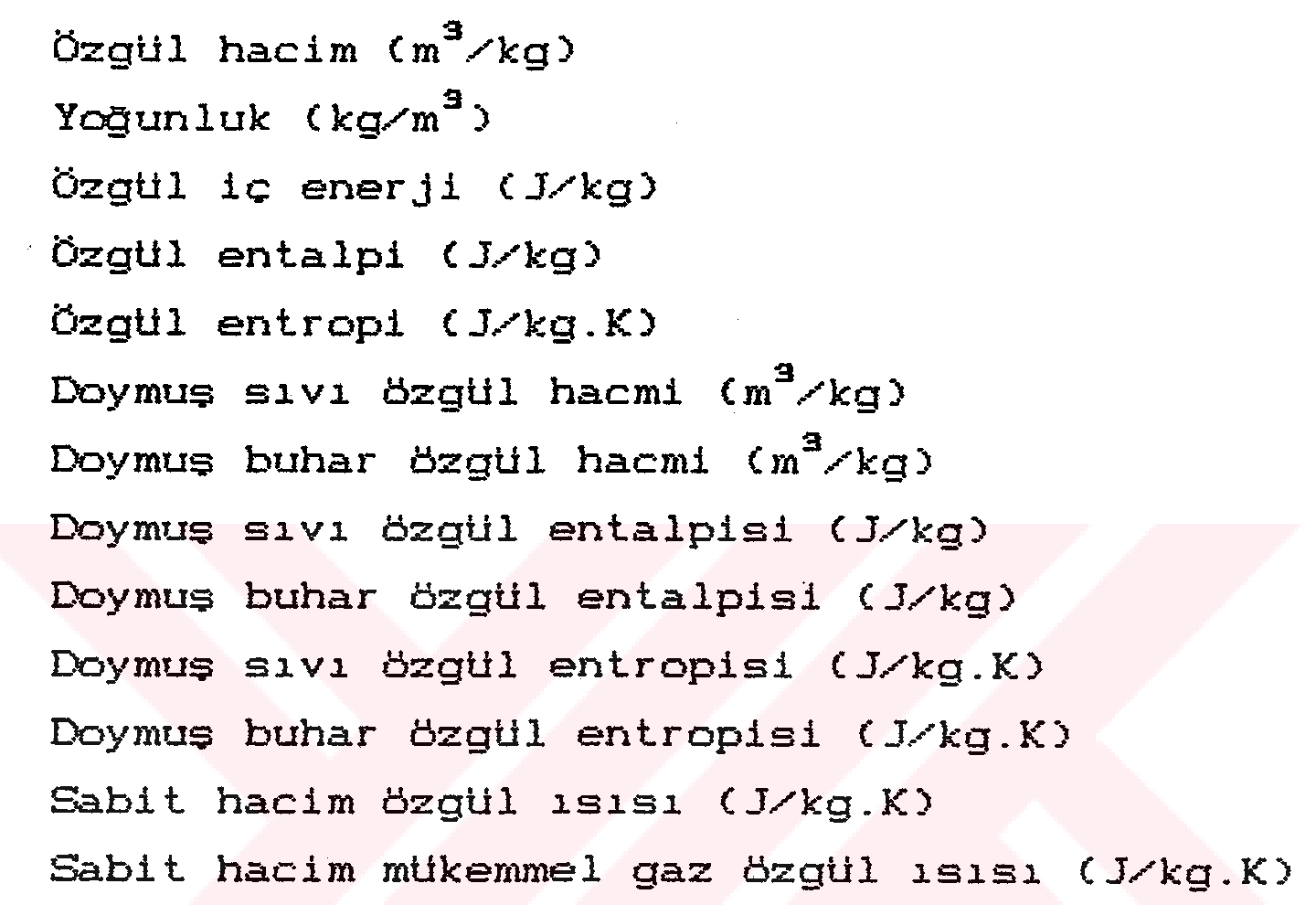
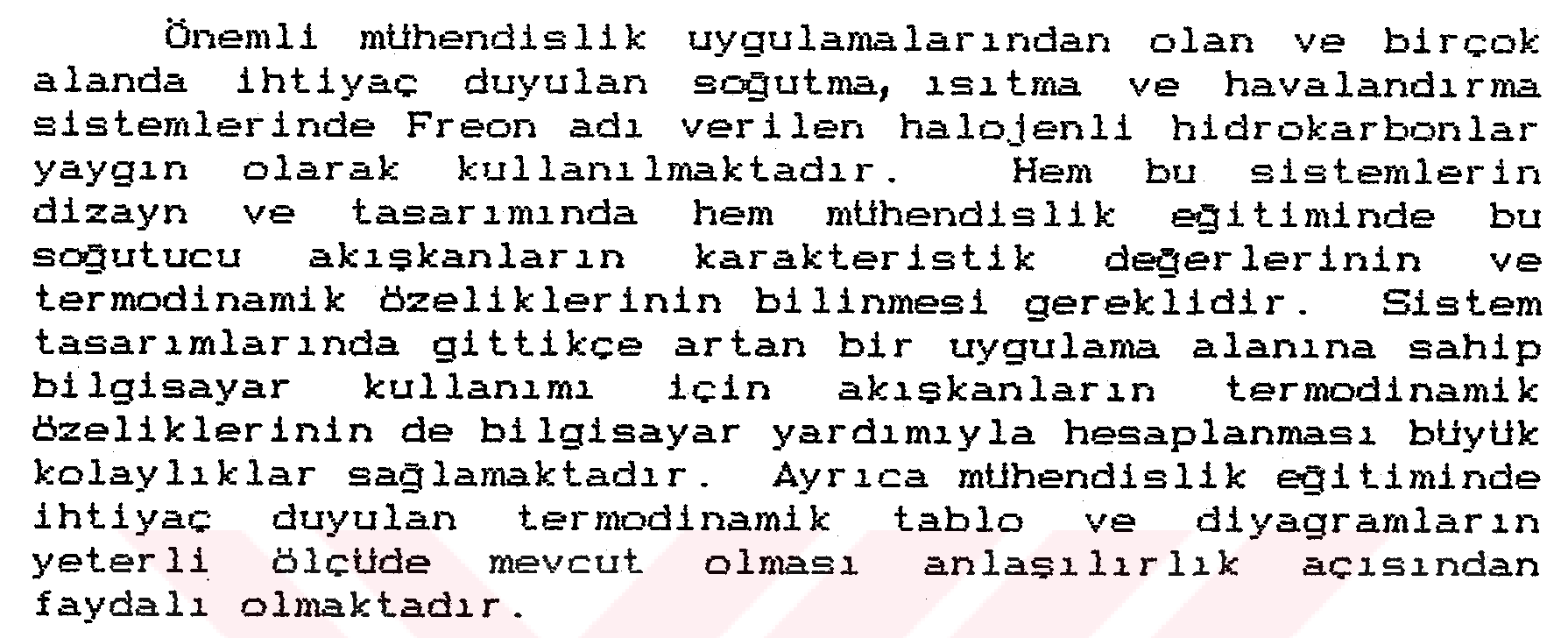
Halocarbon refrigerants are used widely in the cooling, heating and air-conditioning systems some of important engineering applications and needed in many departments. In both the design of these systems and engineering education, characteristics and thermodynamic properties of these refrigerants must be known. It will be very useful to calculate these properties by a computer playing a great role in the system designs from day to day. And also in engineering education, it is useful for understanding to be available enough thermodynamic tables and diagrams for any refrigerants. In this study, by using four property equations developed by ReynoldsC13 and thermodynamic relations, a computer program has been prepared calculating the thermodynamic properties of refrigerants Fll, F12, F13, Fİ4. F22, F23, F114, FC-318, F500, FS02 and forming the tables and diagrams and drawing cooling cycles on LnP-h and T-s diagrams. Thermodynamic properties, mostly considered in the analysis of cooling cycle are temperature, pressure, specific volume, internal energy, enthalpy and entropy. All these properties are the function of each other and define the state of a substance. It is known that the state of a simple compressible substance is completely spec i f i ed by two i ndependen t, in tens ive pr öper t i es. Therefore all the properties of a substance at any state can be calculated once two independent, intensive properties are available. Only three of the properties given above can be directly measured; temperature, pressure, specific volume. However, the important properties in engineering such as internal energy, enthalpy, entropy cannot be measured by using any experimental methods. The calculation of these properties is only possible by developing some thermodynamic relations between these properties and measurable properties by using thermodynamic relations and property equations given in the literature by many researchers. There are many ways developed for this aim. The way used in the study has been explained below: Four basic equations used in the program were formed and their coefficients were determined by ReynoldsE13 after compiling the empirical data of many researchers These four equations are: 1 ^Equation of State CP-v-T Relations}: R T s 1 r -kT/T P=PCT,v>= + E - f A. +B T+C e k 1 v-b 1 = 2 Cv-hj K J -kT/T A +B T+C e + * « £ C15 eaV Cl+caaV > 2DIdeal Gas Specific Heat Equation: c = c CT}= r G Tv_± + G /T2 C2> VÜ VO ** 1. 5 3>Saturation Pressure Equation: i 5 F12 için, F Ln P = F + - + F Ln T + F T C3-a) d i T 3 4 İİ5 F23 için, F Ln P= F + - + F Ln T + F T + F T2 +F T3 C3-b5 d i _ 3 4, 5 Ö ill) Fil. F13, F14, F22, Fİ14, FC-318, FSÛO, F502 icin F y-T Ln P = F + - +F LnT+FT+F Lnty-T5 C3-e5.d^Saturated Liquid Equation:.s < i - 1 > ya İ/2 2 ö = £ D X + D X +.D X C45 X=l- y~ C4-a5 k In the above equations, symbols are defined as follows; T : Temperature CK5 P : Pressure CPa) v : Specific volume Cm /kg> VI IIc : Specific heat at constant volume for an ideal vo gas C J/kg. K 5 P, : Saturation pressure CPa> p : Saturated liquid density Ckg/m 5 T : Critical temperature CK> K R : Gas constant CJ/kg.iO A., B.. C.. G.. D.. F.. b»k,ot,c,y : Empirical constant l I I l J. t Calculation of properties in the superheated vapor region is done as follows: Two additional equations for calculating the internal energy and entropy are developed firstly. The internal energy is usually defined as the function of T and v, u=uCT,v3. By taking its total di f f erantial, a u a u du=C ) dT +C 3 dv C55 a t v a v T Using the definition of specific heat at constant volume a u du= c dT + C - > dv C63 V - T Q v An important thermodynamic relationship, derived in most thermodynamic books [2, 3,43, is a u a p C 5 = T C > -P C7> # v T a T v Substituting Eqn. C73 in Eqn. C63 j= c dT -f v I a p. du= c dT -| P - T C > dv C8> a t v J Rewriting the last equation with respect to specific volume v=l/p, dv=dp/p 1 f * P 1 du= c dT + P - T C 3 dp C9> p2 I 3T pi The change of internal energy of a simple compressible substance is associated with a change of state from Cp,T ') to Cp,T'}t shown in Figure 1. Since o o internal energy, u, is a property and total diff erantial, the integration of it is independent from the integration way. So the integration of this equation can be taken first at constant density, than at constant temperature by considering the equation of state and the ideal gas specific heat equation; IKo Cpo,T> T O ü O Sekil -.Cp.T} 1.1. The integration way of calculation of the differences of internal energy and enthalpy by using experimentel data -; c CT>dT + vo t- â p P - T C "> d T P ]dp+uo C10> where, u : internal energy CJ>'kg5 T : reference temperature CIO u : reference internal enerqy at reference state o -" P CJ/kg> density C kg/m 5 This equation can also be written with respect to specific volume replacing density as the variable; -J c CT>dT + vO Û i [ P -T C 5 1 J I 3T VJ dv + u Cll) The enthalpy property is calculated by using a simple thermodynamic relationship» h=u+Pv (. 1 2 3 And the entropy can be determined from the Gibbs equation E 23, Tds=du+Pdv C13> ds=- =- du + - =- dv C14> xSubstituting Eqn.CQ) in Eqn. £14-3 and considering v=l/p, 2 ) dp CİS> P After adding and subtracting a term RdpSp from this equation, if it is integrated in the manner shown Fiq.l, ç CvoCT5 s = j dT - R Lnp J T T O P r * r d p i where, s.- reference entropy at reference state' CJ/kq.K} o Thus for a given temperature and specific volume, the properties u, h, s in the superheated vapor region are calculated by using these developed equations above. These main equations were used in the program. It is seen that all equations are the function of tempereture and specific volume. When two different properties other than T, v are given, the equations must be written with respect to the given properties to calculate the other properties. It is highly difficult to obtain them for any given two properties because of being some logarithmic, exponential and total terms in those equations. For this aim Newton-Raphson methodESD was used by derivating these equations. Detailed explanations were given in Section 3. Calculation of thermodynamic properties in the saturation region proceeds as follows: Saturation temperature, T or saturation pressure, P is given to d d calculate the saturation properties. If T is known, P, d d is calculated from the saturation pressure equation C3> directly. If P is qiven the calculation of T, is done d d by using the Eqn. £3) and the partial derivative of it with respect to T. And by using these saturation values d T,, P, the properties of saturated vapor v,, h » s can d d ODD be found by following the procedure of the superheated vapor properties calculation. And saturated liquid specific volume v is calculated from the saturated a liquid equation. Enthalpy and entropy of saturated liquid, h, s are calculated by using the Clapeyron S B SIequationE23, & P s, -s h, -h * t d V*TV TCv -v } tl7:> 0 1 b a b s where, CdP/dT), is calculated from saturation pressure d equations C3>. So, from Clapeyron equation the enthalpy of saturated liquid is â P h = h -T (v -v K } CIS} a b b s ^ " d and the entropy of saturated liquid is h -h s a s- - - C195 a b _ Thus all thermodynamic properties in the regions of superheated vapor and saturation are calculated by using these developed equations. The program consists of six subparts and many subroutines directed by a main menu. The parts of main menu enables to use the program easily and give the definition of special aims from the most general aim. When the program is run, firstly the refrigerant is choosen from the subroutine "Akışkan Secimi". And for chooser» refrigerant, the coefficients of equations are read from the data directory and the name of directories will be used by the "Diyagram" part are determined in the subroutine of "Katsayılar". After coming to the main menu, all commands and the running of the program are directed by this part. The six parts of the main menu are: 1-Hesaplama : Calculation 2-Tablo : Tables 3-Diyagram : Diagrams 4- Diyagram ve çevrim çizimi : Di agrams&Dr awing cycle 5- Yeni akışkan secimi : New refrigerant S-Cıkıs : Exit The contents and running of these parts are summar i zed below : i-Hesaplama : After determining the entrance values, the properties in the superheated vapor and saturation regions are calculated in this part. It returns again to the "Hesaplama" part for new values after showing the results on the screen. XII2-Tablo : This part enables to prepare tables in the three common form. These tables are prepared due to the changing of saturation temperature, saturation pressure and temperature and pressure. 3-Diyagram : For any refrigerants the diagrams of LnP-h and T-s or both of them can be drawn on the screen by using this part. ?4-Diyagram ve çevrim çişimi : This part allows to draw cooling cycle on the LnP-h and T-s diagrams. The definition of characteristic properties of cooling system i s done manua 1 1 y. 5- Yeni akışkan seçimi : By using this part, it is possible to choose a new refrigerant and to use the program for it, without exiting the program. 6-Cikas : Exit from the program All of these parts run effectively and interactively by calling the prepared subroutines. The flow chart of the program is given in appendix. The program was run for each refrigerant and compared with the tables and diagrams given by Reynolds £13 prepared by using the same equations. For the aim of helping to the studies in the future, equations, coefficients of equations, and variables used in the program and flow chart are given in appendix. In addition, LnP-h and T-s diagrams for each refrigerant have been included to appendix. XI XI
Author
Dr. Yahya Doğu

How to Cite
Yahya Doğu (Master Thesis). Computer aided calculation of thermodynamic properties and formation of tables and diagrams of refrigerants, 1992, Istanbul Technical University.
Figures & Images (130)
License
Tüm Hakları Saklıdır
This work is shared under the specified license terms.
More theses from Istanbul Technical University
- Investigation Of Stretching Effect With Mixed Finite Element Formulations For Laminated Beams And Plates(2023)
- Removal and recovery of platinum group metals through anode slimes of moebius electrolysis(2015)
- Classification of anemia using data mining methods: An application(2015)
- A study of design approaches to Istanbul's city halls based on space syntax theory(2015)
- Tersine metabolik mühendislik yöntemi ile aluminyuma dirençli Saccharomyces cerevisiae eldesi(2015)
- Evolution of timber construction systems in the second half of the 19th century in Istanbul: Rationalization of the traditional(2015)