
Investigation of mechanical behavior of the cement mortars containing different types and ratios of polimeric fiber additives under high temperature
2012
0 görüntülenme
0 i̇ndirme
Danışman: Yrd. Doç. Dr. Ahmet Çavdar
Özet (EN)
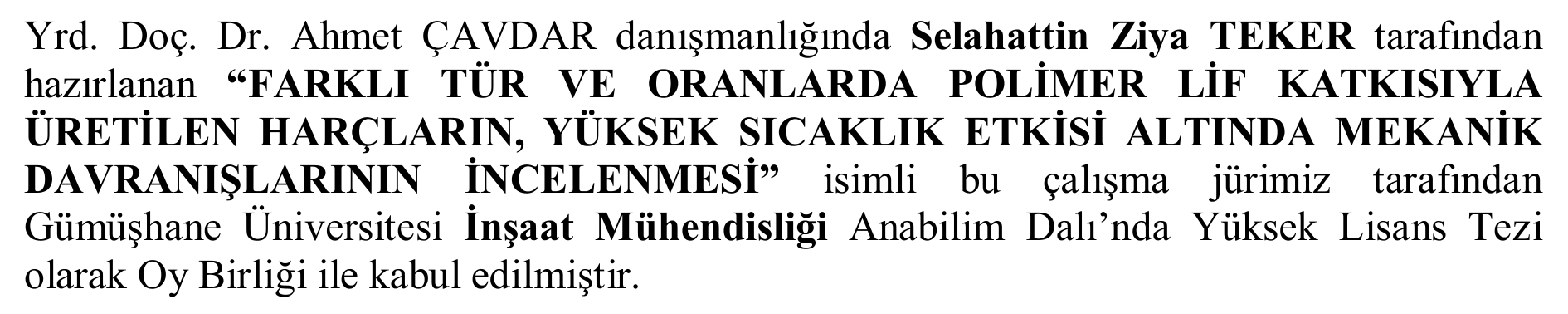
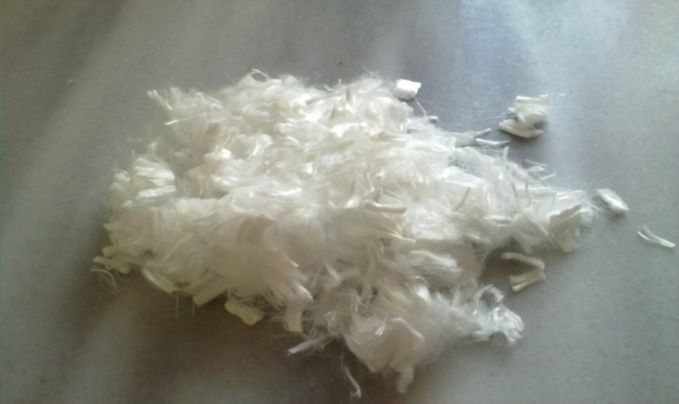
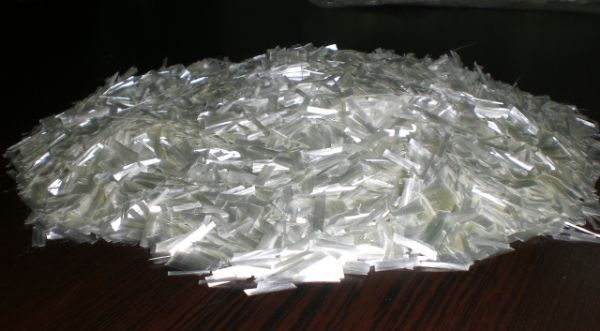
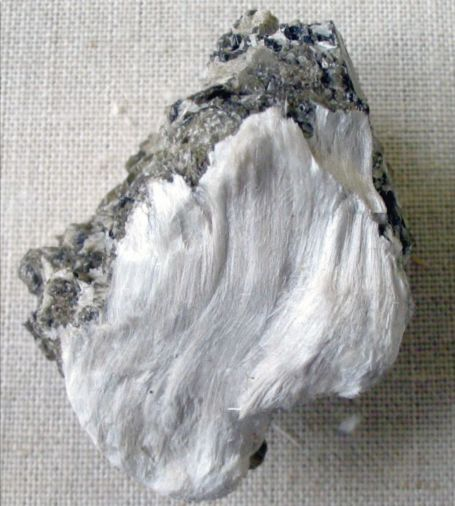
Fibers are added to concrete because of increasing flexural strength and prevent cracks to some degree. On the other hand, polymeric fibers that are found using area extensively in concrete industry in these days are cheap petrol derivatives materials. Besides theirs additions to concrete, fibers are also have some adverse effects on concrete like decreasing compressive strength by constituting discontinuities in it.In this study, the effects of polymeric fibers additives on mechanical properties of the cement mortars under high temperature are investigated experimentally. In addition, the optimum filament length that provides the best performance for the cement mortars is determined. Thus, it is aimed that the mechanical properties like flexural strength and deflection properties are improved without decreasing compressive strength of the cement mortars.The study consists of three stages for intended purposes. At the first stages, it is used four different length filaments (5 mm, 10 mm, 15 mm and 20 mm) by fixing the fiber ratio (2.0 % by volume) and materials properties (carbon fiber), thus, the optimum fiber length that provides the best mechanical properties for cement mortars is determined. At the second stages, the mechanical properties of the examples in DYK and EK conditions are investigated for the samples that are fixed lengths (10 mm), in three different types of fibers (HPP, CPP and AR) and in five different ratios of fiber addition (0.00 %, 0.3 %, 0.6 %, 0.9 % and 1.2 %). At the last stages, the polymeric fibers that are fixed lengths (10 mm), in three different types of fibers (HPP, CPP and AR) and in five different ratios of fiber addition (0.00 %, 0.3 %, 0.6 %, 0.9 % and 1.2 %) are added to cement mortars and subjected to five different temperatures (21 °C, 100 °C, 450 °C, 650 °C and 850 °C). And the mechanical properties of these samples are investigated.If the most important findings obtained from this study are summarized; the optimum mechanical behavior is obtained from the addition of 20 mm in length carbon fiber to cement mortar. Aramid fiber is the fiber type that shows the best performance among used in this study. Polymeric fiber additives show the best advantage under EK conditions. This positive of fibers effect continuous to 450°C clearly and they provide benefit to flexural strength, especially, under this temperature. Under high temperature, each fiber shows the best performance with different addition ratio. The highest increase in flexural strength and the lowest decrease in compressive strength are at 0.3-0.9% fiber addition ratio for HPP, at 0.3-0.6 % fiber addition ratio for CPP and at 0.9 % fiber addition ratio for AR for each temperature.
Yazar
Dr. Selahattin Ziya Teker

Bu Yayına Nasıl Atıf Yapılır
Selahattin Ziya Teker (Master Thesis). Investigation of mechanical behavior of the cement mortars containing different types and ratios of polimeric fiber additives under high temperature, 2012, Gümüşhane University.
Şekiller ve Görseller (29)
Anahtar Kelimeler
Lisans
Tüm Hakları Saklıdır
Bu eser belirtilen lisans koşulları altında paylaşılmaktadır.
Gümüşhane University tezlerinden daha fazlası
- RÜZGAR ENERJİSİ SANTRALİ İÇİN YER SEÇİM ANALİZİ: GİRESUN İLİ ÖRNEĞİ(2026)
- Francis Bacon's understanding of induction(2024)
- Investigation of the effects of the French contrast method, a post activation model, on jump force and speed performance in amateur handball players(2025)
- GÜMÜŞHANE DEVLET HASTANESİNDEKİ HEMŞİRELERİN AFET TEHDİDİ İÇİN PSİKOLOJİK HAZIRLIKLARININ BELİRLENMESİ(2026)
- Performance evaluation of deep learning models for intrusion detection using network traffic(2026)
- Structure and theme in Sibel K. Türker’s novels(2026)