
The controlled crystallization and mechanical properties of Li2O-ZnO-SiO2 base glasses
1993
0 views
0 downloads
Advisor: Doç.dr. Erdem Demirkesen
Abstract (EN)
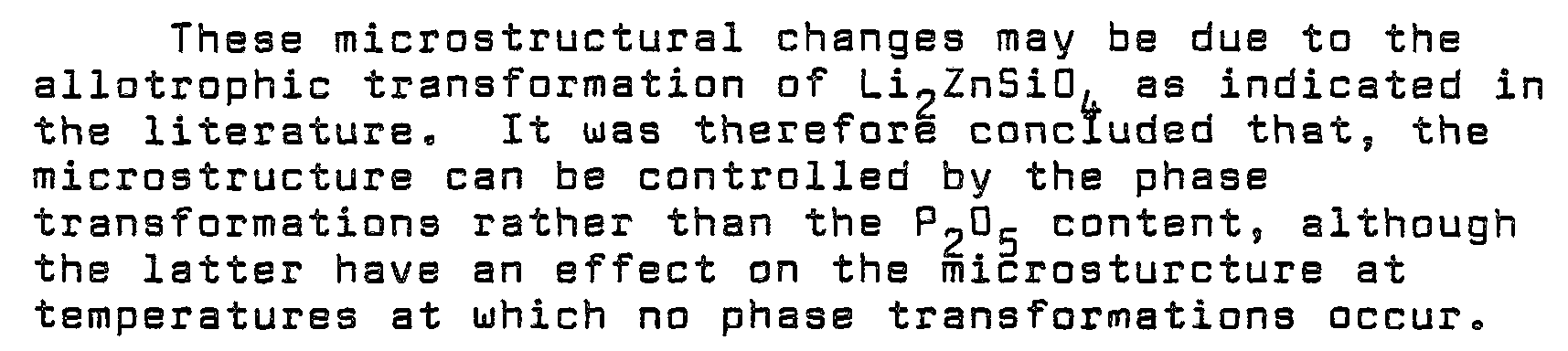
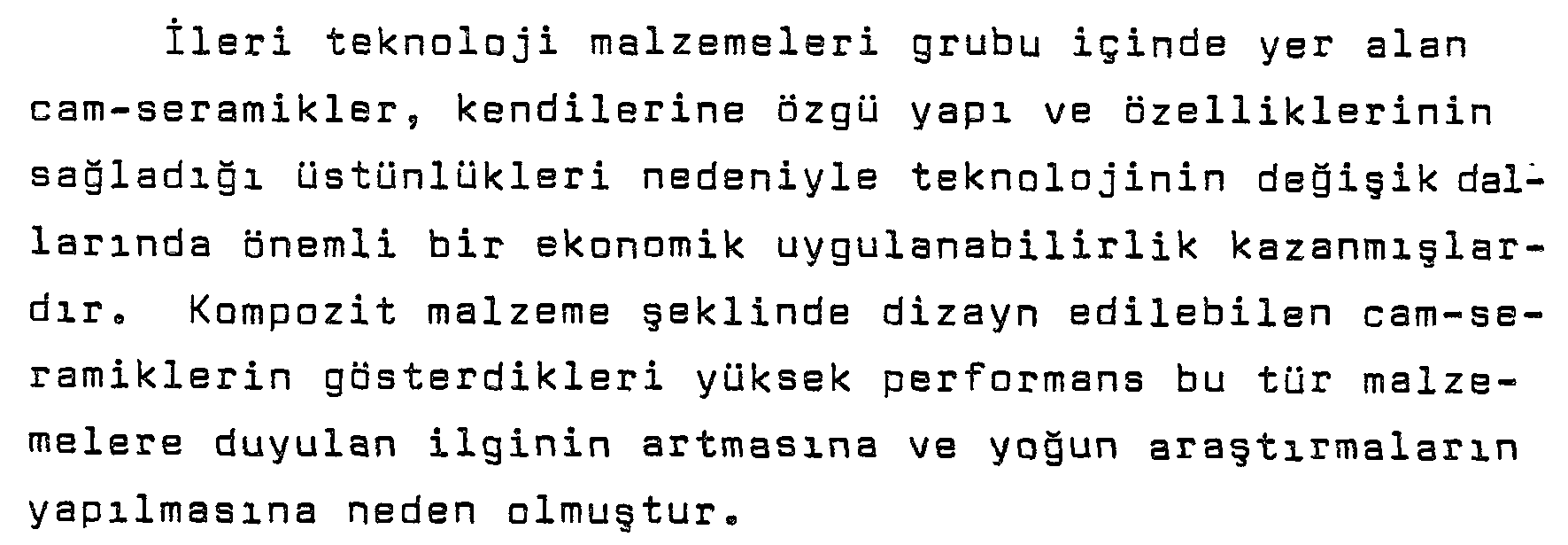
THE CONTROLLED CRYSTALLIZATION AND HECHANICAL PROPERTIES OF Li20-Zn0-Si02 BASE GLASSES Glass-ceramics are polycrystalline solids prepared by the controlled crystallisation of glasses. Crystallisation is accomplished by subjecting suitable. glasses to a carefully requlated heat-treatment schedule which results in the nucleation and growth of crystal phases within the glass. In many cases, the crystallisation process can be taken almost to completion but a small proportion of residual glass-phase is often present. In glass-ceramics, the crystalline phases are entirely produced by crystal growth from a homogenous glass phase and this distinguishes these materials from tradional ceramics where most of the crystalline material is introduced when the ceramic composition is prepared although some recrystallisation may occur or new crystal types may arise due to solid state reactions. Elass- * ceramics are distinguished from glasses by the presence of major amounts of crystals since glasses are amorphous or non-crystalline. One of the most important criterion in selecting a glass composition for glass-ceramic production is that it shall be capable of being crystallised without the use of prohibitively long heat-treatments. It is also important that the constituents of the glass and their proportions shall be chosen so that crystal types can "be developed which will confer upon the final glass-ceramic the. desired charocteristics, Ü ' There are certain glasses which are extremly difficult, if not impossible, to devitrify even with prolonged heating at temperatures at which crystal VIi The dependence of crystallizing phases on the heat- treatment schedule and the influence of PpüV content used as nucleating catalyst on the controlled crystallization process were examined. The aim of the investigation was to understand the relation between properties and microstructure of the glass-ceramics so that suitable heat-treatments schedules could be chosen for producing glass-ceramics with desired properties. amoun Si02x in a quenc was c homog held proph glass by X- sched therm of s scann etchi addit in co cryst All ts o H20, plat hed rush eniz at 1 ite es a ray ules al a ever ing ng i ion, mpos alii glas f an and inum in w ed, e th 350° mild fter diff wer naly al d elec n HF f ra tion sati ses alyt 5b2 cr ater mixe e me C fo s. var ract e de sis evit tron sol ctur Gla on c were ical °3* ucibl. Th d and It. r 2 h The c ious ion ( vised (DTA) rif ie micr ution e mod ss II ondit prepare reagent The mix e at 1 2 e resul remelt The horn and po rystall heat-tr XRD). on the inform d glass oscope, and c ulus of were m ions» d by s Li ture 00-1 ting ed a ogen ured ine eatm The bas atio es a (SEM oati hea easu mixing pCO-j Zn, were m 259°C fo glass a t 1200-1 eous mel into pr phases a ents wer heat-tre is of di n. The re inves ) after ng with t-treate red as a the appropriate 0,Ca,(P0^)2, elted in 75 g. r 2-3h and fter drying 250DC to ts were then eheated ppearing in e identified atment f ferential microstructures tigated by polishing, carbon. In d samples function of XRD alii th c es w 0°C SiO^ was.ass ;nt i, ve 650UC in 2 ho cryst in bo sampl at k5 Li2Zn size of Gl conte stage pattern sation omposit ere hel for 2 h and wa determi I. Thi n Glass ry fine Glass I urs at s indie product ions, d at 51 ours. s obser ned to s was a II. A grains I and a these t ated with It w 0°C f The s ved a be sm ttrib fter d cry t 750 emper that, a sph as fir or 1 5 econd bove 6 aller uted t this i s t a 1 s °C in atures. erulis st ob minut cryst oo°c. in Gl o the nital were Glass Or. was.. 5 :ic mar served es afte alline The s ass II higher crysta observe II aft the first phology when the r holding phase is pherulite than that P20 llisation d at er holding ixThese microstructural changes may be due to the allotrophic transformation of Li?ZnSiO, as indicated in the literature. It uias therefore concluded that, the microstructure can be controlled by the phase transformations rather than the P?0,- content, although the latter have an effect on the microsturcture at temperatures at which no phase transformations occur» Hi The dependence of crystallizing phases on the heat- treatment schedule and the influence of PpüV content used as nucleating catalyst on the controlled crystallization process were examined. The aim of the investigation was to understand the relation between properties and microstructure of the glass-ceramics so that suitable heat-treatments schedules could be chosen for producing glass-ceramics with desired properties. amoun Si02x in a quenc was c homog held proph glass by X- sched therm of s scann etchi addit in co cryst All ts o H20, plat hed rush eniz at 1 ite es a ray ules al a ever ing ng i ion, mpos alii glas f an and inum in w ed, e th 350° mild fter diff wer naly al d elec n HF f ra tion sati ses alyt 5b2 cr ater mixe e me C fo s. var ract e de sis evit tron sol ctur Gla on c were ical °3* ucibl. Th d and It. r 2 h The c ious ion ( vised (DTA) rif ie micr ution e mod ss II ondit prepare reagent The mix e at 1 2 e resul remelt The horn and po rystall heat-tr XRD). on the inform d glass oscope, and c ulus of were m ions» d by s Li ture 00-1 ting ed a ogen ured ine eatm The bas atio es a (SEM oati hea easu mixing pCO-j Zn, were m 259°C fo glass a t 1200-1 eous mel into pr phases a ents wer heat-tre is of di n. The re inves ) after ng with t-treate red as a the appropriate 0,Ca,(P0^)2, elted in 75 g. r 2-3h and fter drying 250DC to ts were then eheated ppearing in e identified atment f ferential microstructures tigated by polishing, carbon. In d samples function of XRD alii th c es w 0°C SiO^ was.ass ;nt i, ve 650UC in 2 ho cryst in bo sampl at k5 Li2Zn size of Gl conte stage pattern sation omposit ere hel for 2 h and wa determi I. Thi n Glass ry fine Glass I urs at s indie product ions, d at 51 ours. s obser ned to s was a II. A grains I and a these t ated with It w 0°C f The s ved a be sm ttrib fter d cry t 750 emper that, a sph as fir or 1 5 econd bove 6 aller uted t this i s t a 1 s °C in atures. erulis st ob minut cryst oo°c. in Gl o the nital were Glass Or. was.. 5 :ic mar served es afte alline The s ass II higher crysta observe II aft the first phology when the r holding phase is pherulite than that P20 llisation d at er holding ixThese microstructural changes may be due to the allotrophic transformation of Li?ZnSiO, as indicated in the literature. It uias therefore concluded that, the microstructure can be controlled by the phase transformations rather than the P?0,- content, although the latter have an effect on the microsturcture at temperatures at which no phase transformations occur» H
Author
Dr. Altan Erdoğan

How to Cite
Altan Erdoğan (Master Thesis). The controlled crystallization and mechanical properties of Li2O-ZnO-SiO2 base glasses, 1993, Istanbul Technical University.
Figures & Images (129)
License
Tüm Hakları Saklıdır
This work is shared under the specified license terms.
More theses from Istanbul Technical University
- Investigation Of Stretching Effect With Mixed Finite Element Formulations For Laminated Beams And Plates(2023)
- Classification of anemia using data mining methods: An application(2015)
- Removal and recovery of platinum group metals through anode slimes of moebius electrolysis(2015)
- A study of design approaches to Istanbul's city halls based on space syntax theory(2015)
- A II. German Empire project: From Kaiser Wilhelm Monument to German fountain(2015)
- Uzaktan algılama verilerinin yersel ölçümlerle entegrasyonu ile toprak tuzluluk haritalaması; Aşağı Seyhan Ovası, Adana, Türkiye(2015)