
Synthesis of polymers with organofunctional end groups by using cerium
1992
0 views
0 downloads
Advisor: Prof. Dr. Ahmet Akar
Abstract (EN)
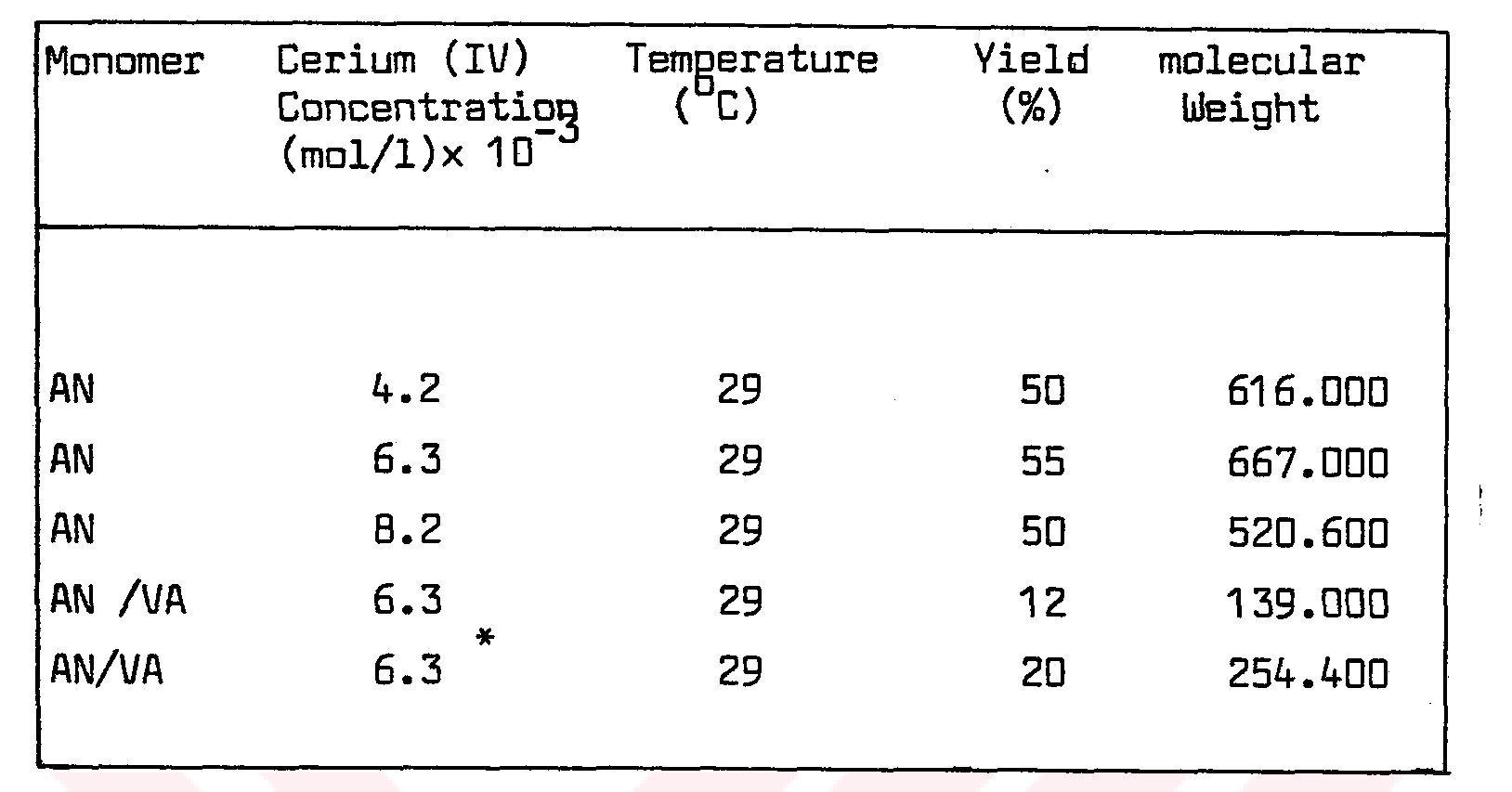
SYNTHESIS OF POLYMERS WITH ORGANOFUNCTIONAL END GROUPS BY USING CERIUM SUMMARY The redox reaction between Cerium Ammonium Nitrate and an organic reducing compound has been used for initiation of vinyl polymerization. In this polymerization system; cerium (IV) is reduced to cerium (III) by reducing compound which forms a radical. This radical initiates polymerization of vinyl monomer. The redox reaction, initiation and vinyl polymerization may be written as follows; Initiation, Ce(IV) + L-H *Ce(III) + H++L. L. + CH2 = CH *[_ - CH2 - CH Propagation, L-CH"- CH + n CH" = CH ? UCH,-CH} CH"-CH Termination, Growing radicals can be terminated by Ce(IU) (linear termination) or by mutual termination reactions, VIUCH-CH} CH"-CH + Ce(IV) * Ce (III)+ Polymer "2, n 2 L4CH"-CH^- CH,- CH + L-(CH"-CH)-CH"-CH d i n i c. m. d. 2h n c i £ip X OH OH X n: 2D-140 X: CN, -C0NH2 VllThis method has been widely used for grafting vinyl monomers such as acrylonitril and acrylamide onto hydroxyl containing natural polymers such as cellulose and strach - The basic reaction is between Ce(IV) and-CH20H or-ÇH - DH groups of cellulose or starch. ' Redox: system of Ce(IV) -organic reducing compound has been used for block copolymerization and polymers with functional end groups in the department of chemistry, İ.T.Ü.. In this work, acrylonitril polymerization and copolymerization with vinyl acetate by the redox system of Ce(Il/)/organophosphorous compound. The organophosphorous compound were ATMP and DTPMPA. The resulting polymer was found to contain 1.3 % phosphorous. The reaction between ATMP or DTPMPA tuith cerium (IV) probably proceeded via a complex formation following a radical formation possible on nitrogen, methylene groups or phosphorous. This radical initiated the polymerization of acrylonitrile or the mixture of acrylonitrile/vinyl acetate (7/1 ) given polyacrylonitrile or poly (acrylonitrile -co-vinyl acetate) with organophosphorous (ATMP) chain ends. The effects of polymerization temperature and time, cerium (IV) concentration and monomer concent ration on the yield and molecular weight of polymer were studied. It was observed that increasing cerium (IV) concentration resulted an increase in both the yield and the molecular weight of polyacrylonitrile. This result was rather unexpected since increasing cerium (IV) concentration should result a decrease in the molecular weight of the polymer due to linear termi nation reaction by cerium (IV). Molecular weight range of polyacrylonitrile produced in this redox system was between 2DG.D0Q- 65D.D00. These values were much higher than molecular weight of polymer produced with other redox Vlllpolimeriigation system. From the experimental results, following polymerization mechanism was put forward. Cerium (IV) reacted with ATMP to produce [ATMP} radical which initiate polymerization of acrylonitrile and polyacrylonitrile with ATMP chain ends was produced another cerium (IV) preferably reacted with ATMP chain ends of polyacrylonitrile following a chain extention polymerization yielded polyacrylonitrile with much higher molecular weight. This chain extention reaction probably increased with increasing eerium (IV) concentration. Polymerization mechanism may be written as follows; ATMP + Ce(IV) * [ATMP]. + Ce (III) [ATMP]VnCH2 = CH.> ATMP4CH2-CH} I I CN CN ATMP4CH"-CH^- + Ce(IV) *.. ATMP^CHL-CH) - ATMP c n c n CN CN CN This mechanism may explain the increase in both molecular weight and the yield with incerasing cerium(IV) concentration and high phosphorous content (1.3 %) of high molecular weight of polyacrylonitrile. The results are summurized in the following table. IXTABLE: 1 : Results of Polymerization of Acrylonitrile and Copolymerization of Acrylonitrile-vinyl acetate. * Stock solution of cerium salt mas reduced from 0.2 mol/lt to 0.05 mol/lt.
Author
Dr. Nesrin Köken

How to Cite
Nesrin Köken (Master Thesis). Synthesis of polymers with organofunctional end groups by using cerium, 1992, Istanbul Technical University.
Figures & Images (95)
License
Tüm Hakları Saklıdır
This work is shared under the specified license terms.
More theses from Istanbul Technical University
- Investigation Of Stretching Effect With Mixed Finite Element Formulations For Laminated Beams And Plates(2023)
- Classification of anemia using data mining methods: An application(2015)
- Removal and recovery of platinum group metals through anode slimes of moebius electrolysis(2015)
- A study of design approaches to Istanbul's city halls based on space syntax theory(2015)
- A II. German Empire project: From Kaiser Wilhelm Monument to German fountain(2015)
- Uzaktan algılama verilerinin yersel ölçümlerle entegrasyonu ile toprak tuzluluk haritalaması; Aşağı Seyhan Ovası, Adana, Türkiye(2015)