
Synthesis of new reactants for the substituted phthalociyanines
1992
0 views
0 downloads
Advisor: Prof. Dr. Özer Bekaroğlu
Abstract (EN)
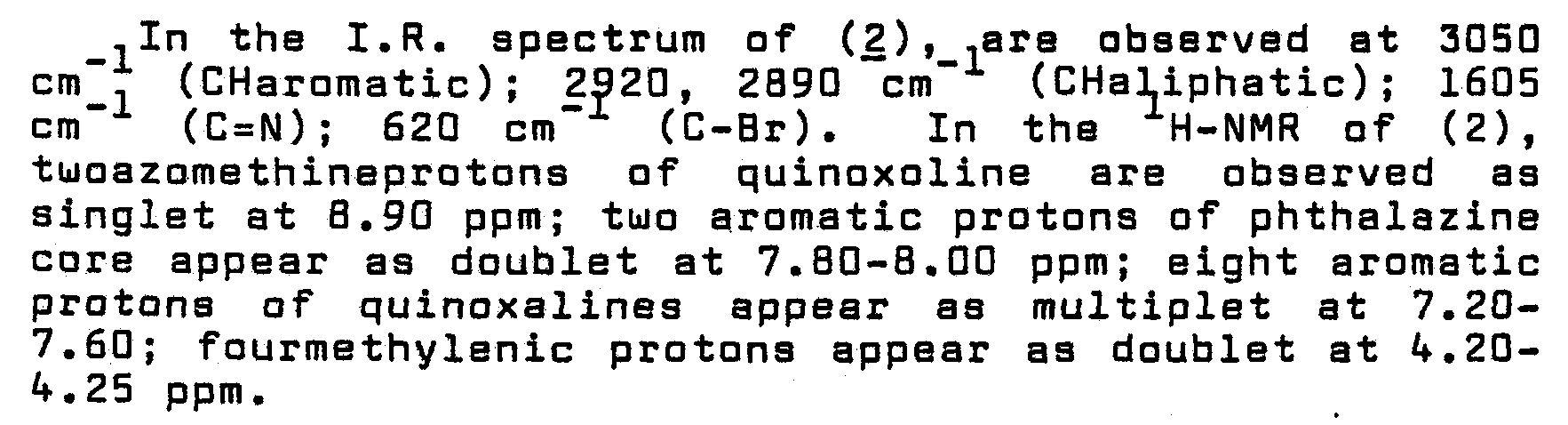
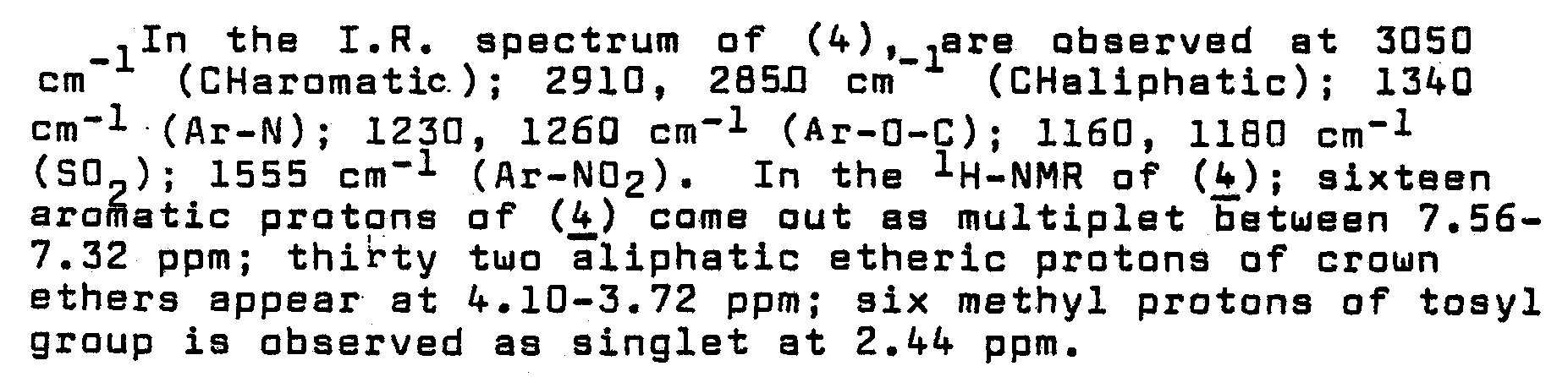
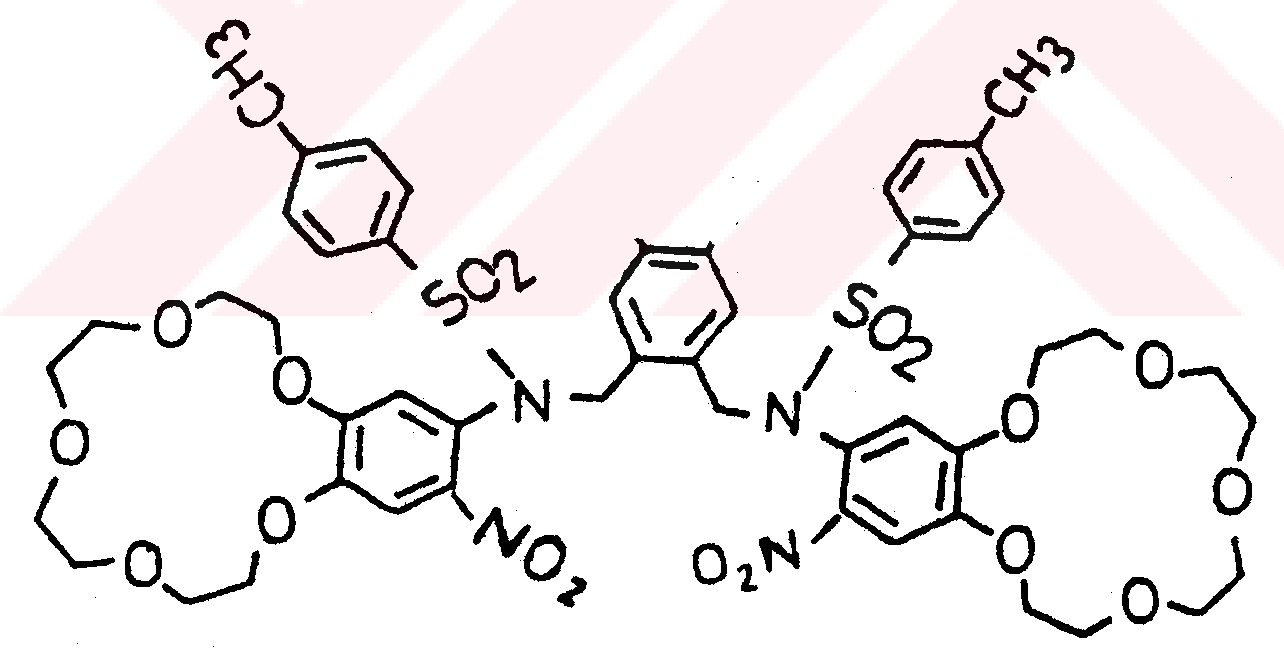
SUMMARY SYNTHESIS OF NEW REACTANTS FOR THE SUBSTITUTED PHTHALOCIYANINES The importance of the rapidly developing coordination chemistry in our daily life is increasing continuously. Coordination compounds or metal complexes are compounds that contain acentral atom or ion, usually a metal ion surrounded by a cluster of ions or molecules which is called ligand. The complex tends to retain its identity even in solution, although partial dissociation may occur. Ligands are considered to be Lewis bases which donate electrons (usually one electron pair per donor group) to the metal ion acting as a Lewis acid. The metal atom is referred to as the central metal atom or coordinated metal atom or ion. All of the groups attached directly to the central metal are coordinating groups or ligands. A ligand attached directly through only one coordinating atom is called a monodentate, "onetothed" ligand. Carbonmonoxide and chloride ion for example are monodentate ligands. A ligand that may be attached through more than one atom is mltidentate, the number of actual coordination sites being indicated by the terms bi, tri, tetra etc. prefixes. Multidentate ligands attached to a central metal by more than one coordinating atom are called "chelating ligands". Their complexes are called chelates. The ligands directly bond to the metal are said to be in the inner coordination sphere, and the caunter ions that balace out the charge remaining on the complex after the coordination number of the central metal has been satisfied are said to be outer sphere ions. The complexes of transition metals with various ligands are known since Werner. The stable complexes of the macrocyclic polyethers with alkali and alkaline-earth metal salts are important subject of intensive investigations since the works of Pedersen in 1967. Pedersen prapared more than 60 compounds in order to ascertain the optimum ring sizs and the preferred constitational arrangement of oxygen atoms in the -VI-macracycles for them to complex uiith a wide variety of ca tionic species. The formation of macrocyclic rings is favored by the presence of cation of appropriate size that can serve to hold the pratially formed ligand in position as the of the ring is synthesized. This process is called the "template effect". When the alkali metal is present in the reaction mixture, the higher yield would be obtained in preparing crown ethers and phtholocyanines. The study of the properties and syntheses of mycracyclic complexes may have important concequences for biochemistry since may important compounds in living systems, such as chloropyll, hemoglobin etc., contain macrocyclic porphyrin rings attached to metal atoms. The biosynthesis of these compounds propably in values some form of template synthesis. A group of related compounds, the phthalocyanines, are isoelectronic with porphrins. They are interest not only as a model compounds for the biologically important porphrins but also the commercially important intensly coloured metal complexes as dyes and pigments. Phthalocyanines are macrocyclic molecules containing four isoindole units, which are synthetic analogs of naturally occuring porphyrins derived from the parphin ring system. The stability of copper phthalocyanine to light acids and alkalies makes these coloured valuable as pigment for painting on paper or textile goads. The phthalocyanine pigments are alsa used in colouring paper, rubber, plastics and linoleum. Metal phthalocyanines can be prepared as follows: 1- The reaction of phthalonitrile or its substitution products with metal or metal salts. 2- The reaction of phthalic anhydride, pthalimide or their substitution products with urea in the presence öf metallic salt. 3- The reaction of orto-dihalogenated aromatic compounds with metal cyanides. k- Direct addition of metals to metal free phtlalocyanine or metal interchange with other metal phthalocyanines under suitable conditions. -Vll-The radius of the cavity in the center of phthalocyanine molecule beasures approximately 1.35 A according to x-ray diffraction data. All of the metallic phthalocyanine complexes which resist the attact of mineral acids contain metals whose normal effective radii are of this order of magnitude. Larger or smaller atoms can be demetallized by acids. The order of stability of complexes of phthalocyanine with +2 metal ions is that expected on the basis of the Irving-Will5 ams series except that the square planar ligand favors the d*3 confi guration of nikel (II). The order Ni2+ Cu2+ Fe2+ Zn2+. Most of the unsubtitutBd phthalocyaninas can exist in two crystalline modifications, which differ from each other in solubility, shade and thermodynamic stability. The metastable form is termed the "alpha" modification, the more stable form is termed the "beta" modification. The two forms are readily identified by their x-ray diffractions patterns. The more stable beta modifications of the phthalocyanine pigments are produce when they are treated with organic solvents, the rate of phase change being dependent upon the temperature and the nature of the solvent. The metastable alpha forms of the phthalocyanine pigments are produced when they are precipitated from polar or saltforming solvents. The alpha forms revert spontaneously to the beta modifications when they are heated 2QD C, or when they are exposed, even at room temperature, to many organic solvents, particularly those of aromatic character. In the present work, we have synthesized for the first time 2, 3-diphenyl-6, 7-dibromo-l,2,3, k- tetrahydraphthalazine; 2, 3-bis(2-quinaxalinol-6i 7- dibromo-l,2,3,4-tetrahydrophthalazine and l,2-bis{[[ (5'- nitrobenzo-15-Crown-5) '..'yl] p. tolyl-sulphonyl] azametliyi} benzene. The latter contains two benzo [İ5- imethy Jwn-5J crown-5J moieties bridged with azamethyl groups. 2,3-diphenyl-6,7-dibromo- 1,2,3,^- tetrahydro phthalazine ( ı ) was obtained by exothermic reaction of hydrazobenzene with 1, 2-dibromo-4,5 bis (bromomethyl) ben zene in N, N-dimethylaniline (Fig-1). -Vlll-Br «y^ Br Fig:l. 2,3-Difenil-6,7-Dibromo-l,2,3,4- Tetrahydrophtha- lazine{l) In the I.R. spectrum, characteristic absorption bands of the (1) are observed at 3050 cm" (CH aromatic); 2850, 2820 cm-T (CHaliphatic) ; 1340 cm-1 (Ar-N); 620 cm-1 (C-Br). In the İH-NMR spectrum of (_1) two aromatic protons of phthalazine care are observed as singlet at 7.60 ppm; four methylenic protons appear as singlet at 4.60 ppm; ten protons of tuo phenyl substitüents appear as multiplet at 6.80-720 ppm. 2.3-Bis (2-quinoxalina)-6,7-dibromo-l,2,3,4- tetrahydra phthalazine (2) was obtained by the reaction of 2,2'- hyd- razoquinoxaline with 1, 2-dibr,omo-4,5 bis (bromomethyl) ben zene, in dry DMF for 12h at 120 (Fig-2). Br Br fin Fig:2. 2, 3-Bis (2-quinoxalino)- 6,7-Dibromo-l, 2,3,4- Tetra Hydroftftlazine.(2) -IX-1 In the I.R. spectrum of (2),.are observed at 305Ü cra"r (CHaromatic); 2920, 28 9 G ""cm"1 (CHaliphatic) ; 1605 cm"1 (C=N); 620 cm"1 (C-Br). In the XH-NMR of (2), twoazomethineprotons of quinaxaline are observed as singlet at 8.90 ppm; two aromatic protons of phthalazins core appear as doublet at 7.80-8.00 ppm; eight aromatic protons of quinoxalines appear as multiplet at 7.20- 7.60; faurmethylenic protons appear as doublet at 4.20- 4.25 ppm. The first step for the synthesis of azamethyl bridged bis (crouinethers) was the synthesis of 4'-amino- 5'-nitrobenzo [l5-Crown-5] which was tosylated with p. toluensulphonyl chloride in pyridine at 5-10 C to obtain 4 '-p. tolylsulphonyl amina-5 '-nitra benza [15- Crawn-5j (3) 1,2-Bis {[[(5-nitrobenzo-15-Crawn-5) 4'-yl] p. talylsulphonyl] azamethyl} benzene (4) was obtained by the reaction of (3) with 1,2 (bromomethyl) benzene, in dry DMF for 3h at 140.C (fig. 3.). ??? o 0 Keyword: Ftalosiyaninler = Phthalocyanines ; Sübstitüe ftalosiyaninler = Substituted phtalocyanines
Author
Dr. İsmail Yılmaz

How to Cite
İsmail Yılmaz (Master Thesis). Synthesis of new reactants for the substituted phthalociyanines, 1992, Istanbul Technical University.
Figures & Images (88)


License
Tüm Hakları Saklıdır
This work is shared under the specified license terms.
More theses from Istanbul Technical University
- Investigation Of Stretching Effect With Mixed Finite Element Formulations For Laminated Beams And Plates(2023)
- Removal and recovery of platinum group metals through anode slimes of moebius electrolysis(2015)
- Tersine metabolik mühendislik yöntemi ile aluminyuma dirençli Saccharomyces cerevisiae eldesi(2015)
- Classification of anemia using data mining methods: An application(2015)
- A study of design approaches to Istanbul's city halls based on space syntax theory(2015)
- Evolution of timber construction systems in the second half of the 19th century in Istanbul: Rationalization of the traditional(2015)