
 indexed
Determination of athletes' learning styles based on the VARK model: A study on team sports
2026
72 pages
3 views
0 downloads
Advisor: Dr. Öğr. Üyesi Üstün Türker
Abstract (EN)
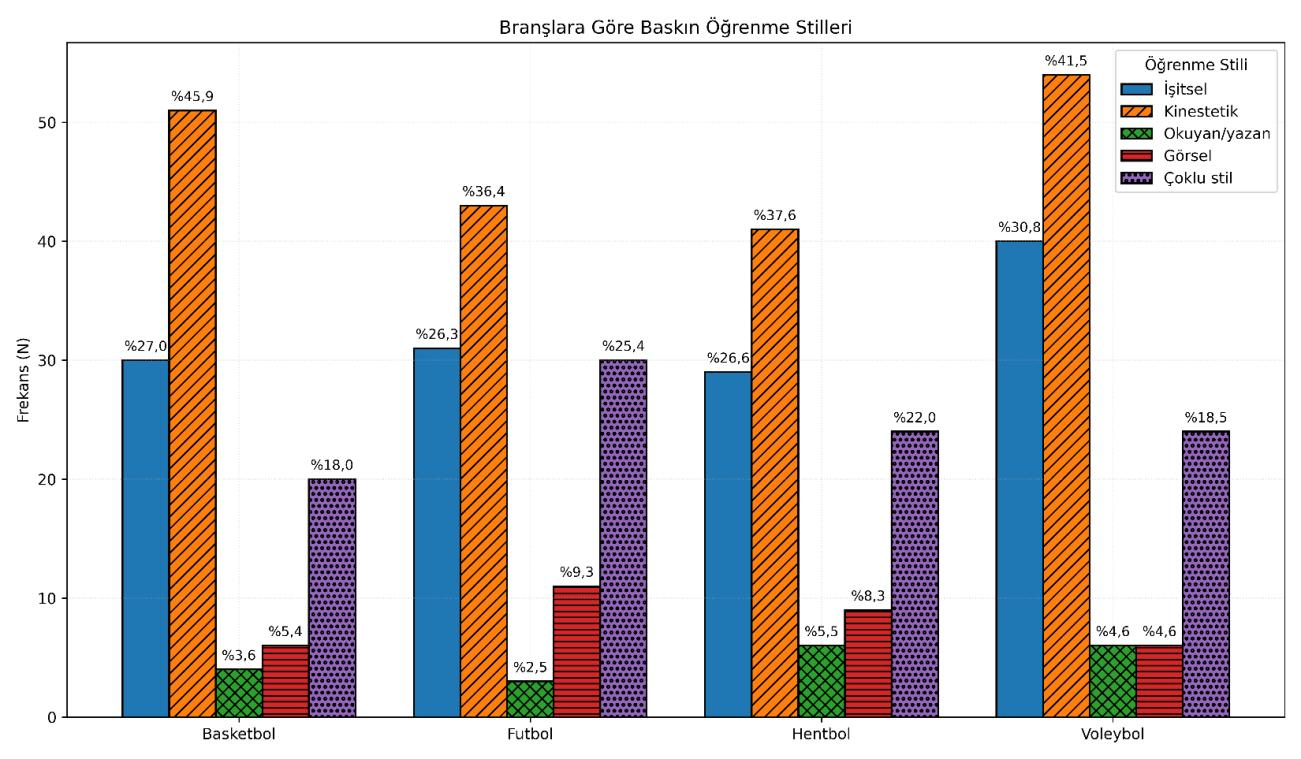
Learning styles refer to individuals’ dominant preferences for perceiving, processing, and utilizing information and are considered an important variable in the planning of educational processes. In sport settings, identifying athletes’ learning styles may contribute to the design of more effective training environments and support athletic development. The aim of this study was to determine the learning styles of team sport athletes according to the VARK model and to examine whether these preferences differed across sport branches. The study was conducted using a descriptive survey design. The sample consisted of 468 athletes actively participating in football, basketball, handball, and volleyball. Data were collected through a Personal Information Form and the VARK Learning Styles Inventory for Athletes using a face-to-face paper-and-pencil administration procedure. The data were analyzed using IBM SPSS Statistics 27. Descriptive statistics, chi-square analysis, correspondence analysis, and K-means clustering techniques were employed in the analysis process. The findings revealed that kinesthetic learning was the most frequently preferred dominant learning style among the athletes (40.4%). Although kinesthetic learning emerged as the predominant preference, 67.7% of the participants demonstrated a multimodal learning profile. No statistically significant relationship was found between sport branch and either dominant learning style or learning model (p>.05). Correspondence analysis indicated that learning preferences did not systematically vary across branches, whereas cluster analysis identified distinct individual learning profiles based on VARK dimensions. Overall, the findings suggest that team sport athletes tend to rely primarily on kinesthetic and auditory learning preferences, while multimodal learning represents the most common learning model. These results highlight the importance of adopting diversified instructional and coaching practices that acknowledge individual learning characteristics within sport education and training environments.

Institution

How to Cite
Selim Yalçın (Master Thesis). Determination of athletes' learning styles based on the VARK model: A study on team sports, 2026, pp. 1-72, Gümüşhane University, DOI: https://doi.org/10.71008/gumushane.thesis.2026.243.
Figures & Images (8)




DOI Status
Requested
Under Review
Approved
DOI Assigned
DOI & Cite
License
Tüm Hakları Saklıdır
This work is shared under the specified license terms.
More theses from Gümüşhane University
- RÜZGAR ENERJİSİ SANTRALİ İÇİN YER SEÇİM ANALİZİ: GİRESUN İLİ ÖRNEĞİ(2026)
- Francis Bacon's understanding of induction(2024)
- Investigation of the effects of the French contrast method, a post activation model, on jump force and speed performance in amateur handball players(2025)
- GÜMÜŞHANE DEVLET HASTANESİNDEKİ HEMŞİRELERİN AFET TEHDİDİ İÇİN PSİKOLOJİK HAZIRLIKLARININ BELİRLENMESİ(2026)
- Performance evaluation of deep learning models for intrusion detection using network traffic(2026)
- Structure and theme in Sibel K. Türker’s novels(2026)