
Identity construction in the Turkish storytelling of The Second Constitutional era
2019
0 views
0 downloads
Advisor: Doç. Dr. Mitat Durmuş
Abstract (EN)
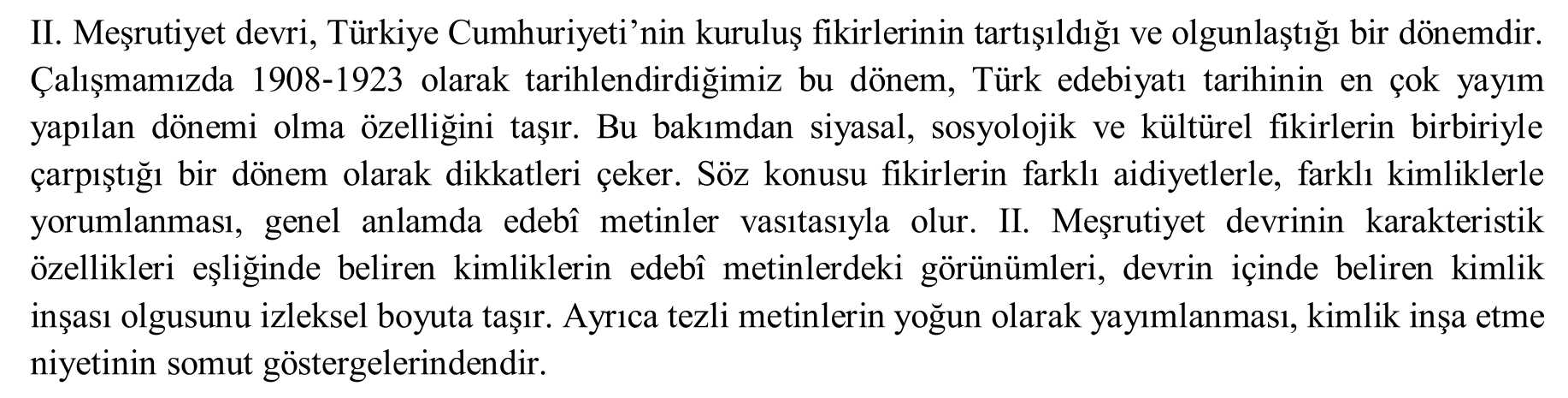
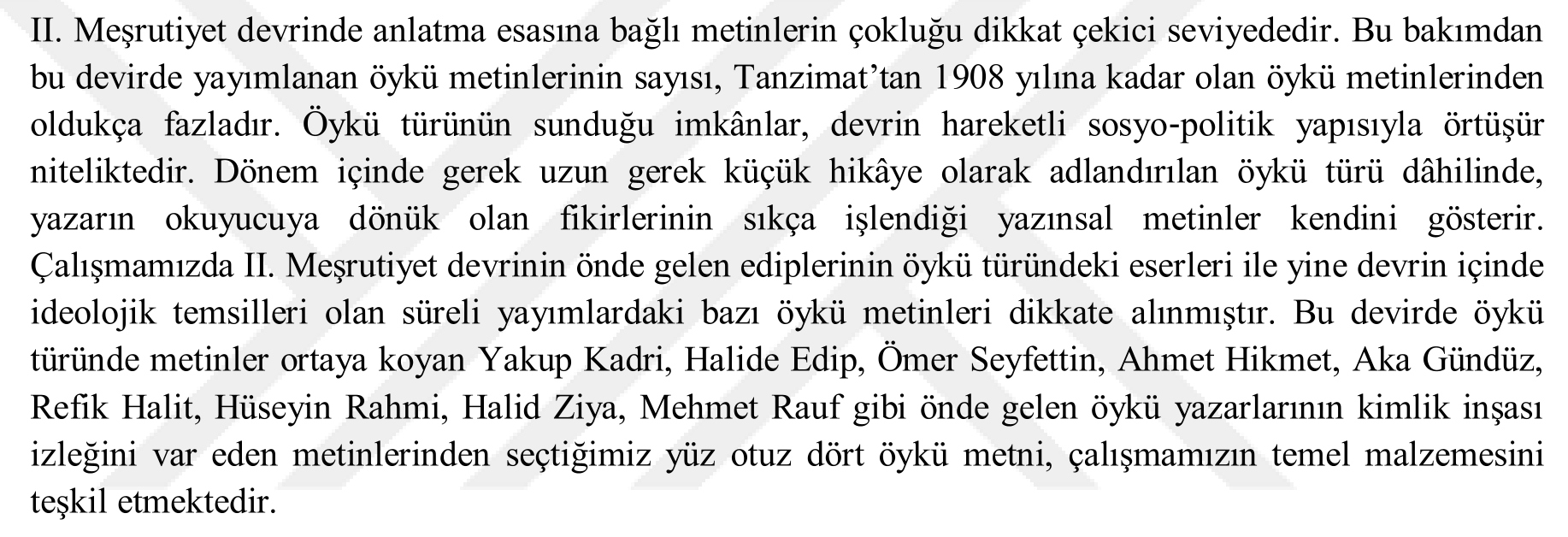
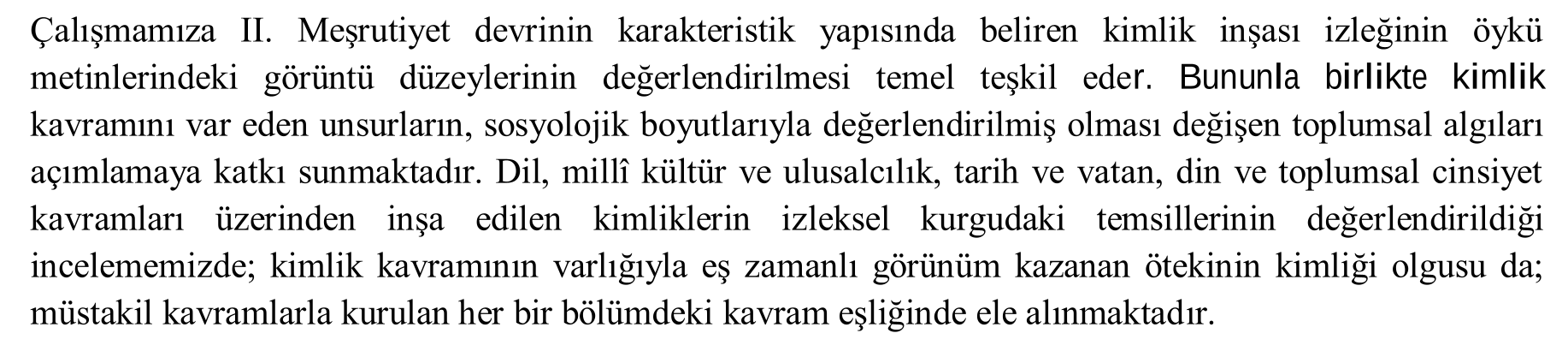
The Ottoman second constitutional era is a period during which ideas about founding the Republic of Turkey were discussed and developed. Dated between 1908 and 1923 in the present study, the highest number of publishing in the history of Turkish literature was made in this period. In this sense, it is highlighted as a period during which political, sociological and cultural ideas clashed with each other. Interpretation of these ideas by different belongings and identities generally occur through literary texts. The appearance in the literary texts of the identities that emerged with the characteristic features of the second constitutional era carries the phenomenon of identity construction which arose in that era to a thematic dimension. Additionally, the intensive publication of texts with a thesis is one of the concrete indicators of the intent of identity construction. The profusion of the texts based on narration in the second constitutional era is remarkable. The number of story texts published in this period is much more than those published from the Imperial Edict of Reorganisation to 1908. The opportunities offered by the story genre are compatible with the dynamic socio-political structure of the time. Within the story genre that include both long and short ones, literary texts in which an author's ideas towards readers are frequently addressed show themselves in this period. In the present study, the story works by the leading men of letters of the time and some story texts published in certain periodicals with an ideological representation in that era were taken into consideration. The main material of the study is one hundred story texts selected from among the texts that created the theme of identity construction by prominent storywriters of the period such as Yakup Kadri, Halide Edip, Ömer Seyfettin, Ahmet Hikmet, Aka Gündüz, Refik Halit, Hüseyin Rahmi, Halid Ziya and Mehmet Rauf. The basis of the study is formed by an assessment of the extent to which the identity construction theme that emerges in the characteristic structure of the second constitutional era appears in the story texts. Additionally, the fact that the elements which create the identity concept are assessed with their sociological dimensions in the study contributes to the exploration of changing social perceptions. Analysing the representations in thematic fiction of identities constructed over the concepts of language, national culture and nationalism, history and homeland, and religion and gender, the study also addresses the identity of the other that manifests synchronously with the existence of the concept of identity along with a specific concept in each of the parts that are established with independent concepts. Keywords: Second constitutional era, Turkish literature, story, identity construction, language, nationality, religion, gender.
Author
Dr. Dinçer Atay
Institution
Ardahan University
Division of Modern Turkish Literature
How to Cite
Dinçer Atay (Doctorate thesis). Identity construction in the Turkish storytelling of The Second Constitutional era, 2019, Ardahan University.
Figures & Images (473)

Keywords
License
Tüm Hakları Saklıdır
This work is shared under the specified license terms.
More theses from Ardahan University
- Dated 1836 Population Book of Sanjak Çıldır in the province of Çıldır(2022)
- Benli Hasan Çelebi (Ahi) - Husn u dil (Examination-comparative text-dictionary-directory)(2018)
- Children's games of Şanlıurfa and its surroundings(2018)
- The folklore and ethnography of Mahalmis who live in Midyat district of Mardin province(2019)
- Orhan Mithat Barbaros' life works art, master thesis(2020)
- The status of women in Trabzon folk culture(2022)