
Subcontracting in construction
1992
0 views
0 downloads
Advisor: Doç. Dr. Zeynep Sözen
Abstract (EN)
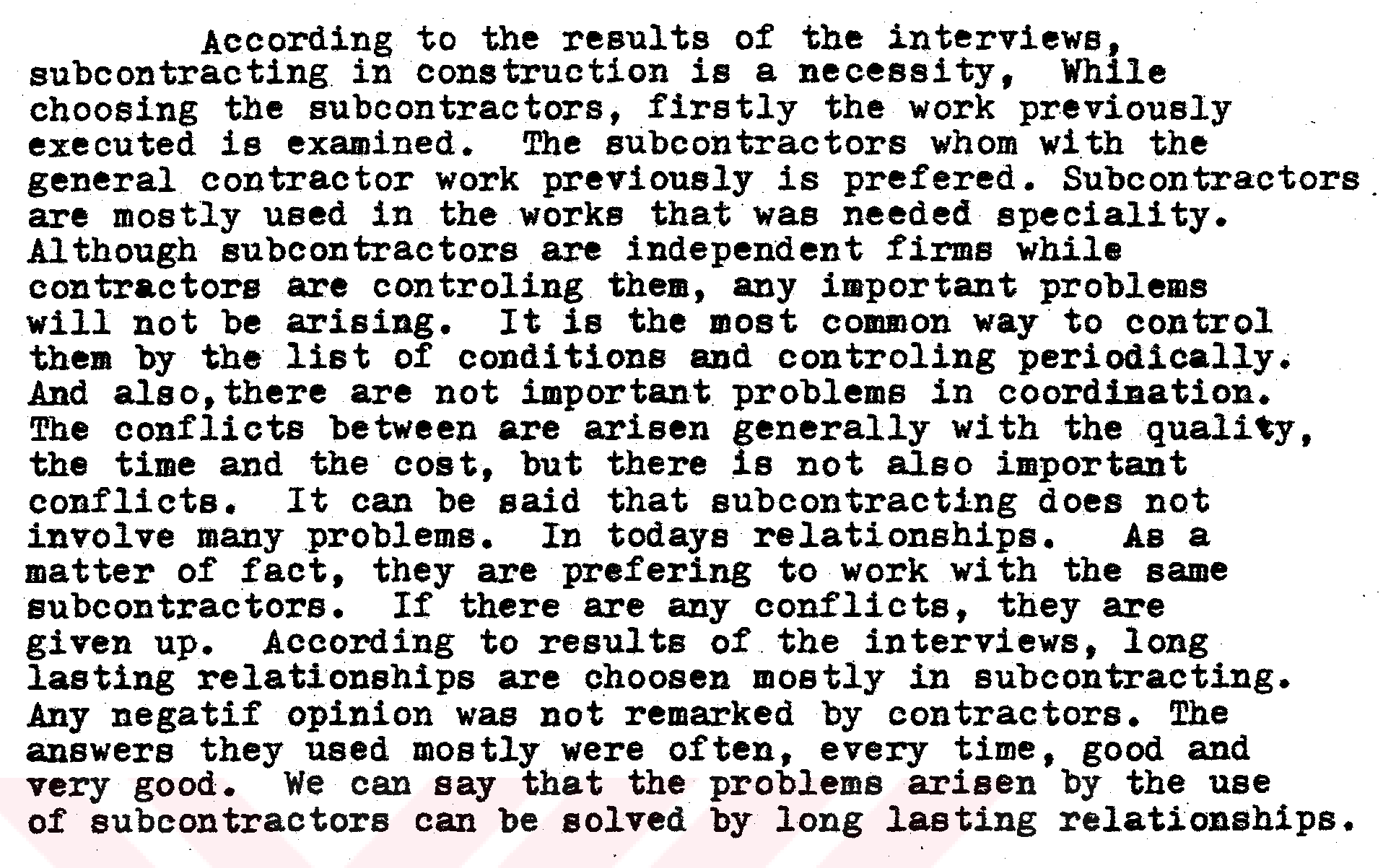
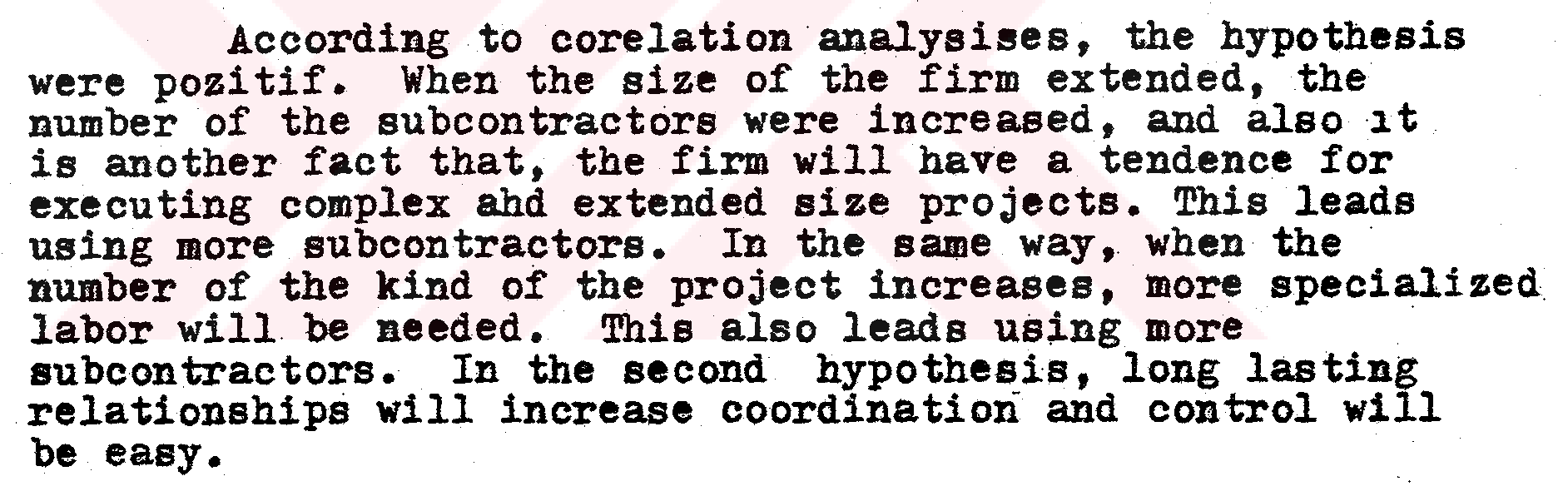
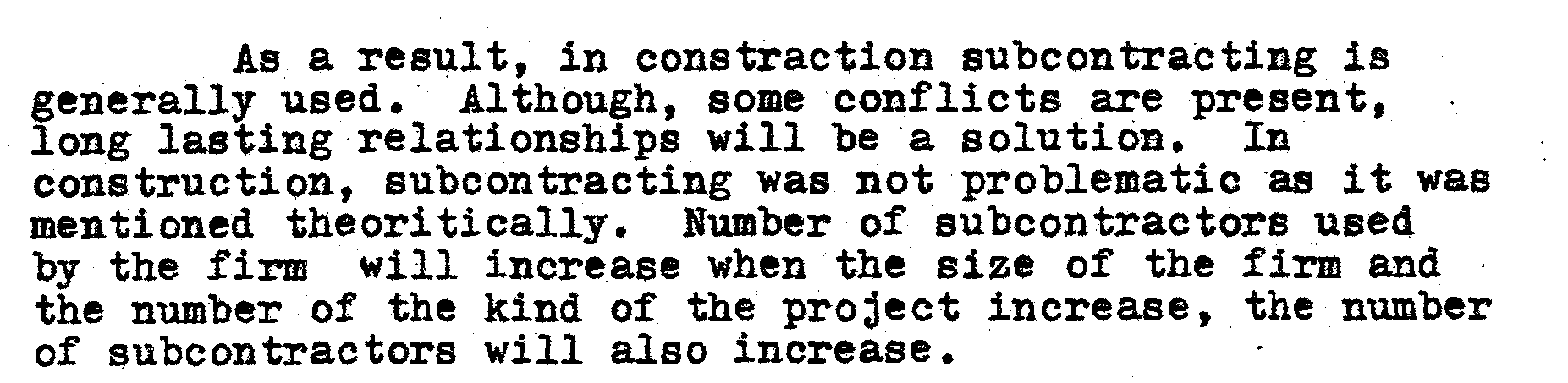
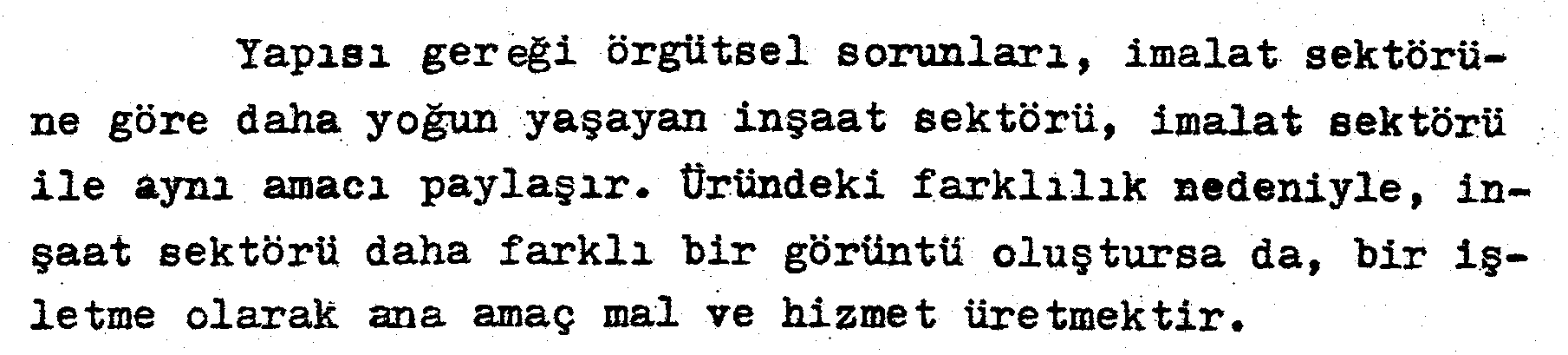
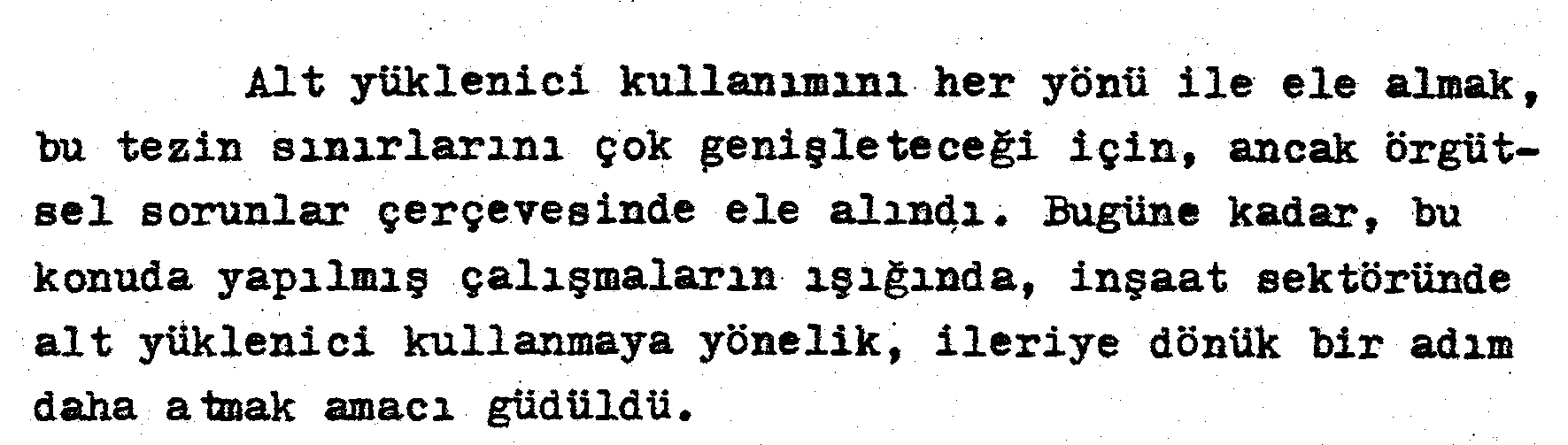
Construction industry differs from production industry in many ways. But, they have the saaie purpose that the production with the probable least cost, highest quality, within the probable shortest time. unique charasteristics of construction industry lead subcontracting. Execution is depended on a project. Because of the product, construction is immobile, instead site is mobile. It is executed due to weather conditions. In construction industry, except the site where the project is executed, there is no factory. The site changes every new project. Charasteristics of product change project to project, too.It can be hotel, school, house or a skyscraper. The product is complex and lasts at least fourty years. With a new project all conditions change, too. Demand is not regular in construction, xt is volatile, It shows a trend of seasonality. Site conditions and demand is unpredictable. This leads risk. Weather conditions also unpredictable. It is impossible for a construction firm to use a standard structural system. It is possible for a construction firm to build a dam, a motorway or a skycraper, all of them require a different structural system or tecnology. In construction industry production requires a large number of labor specialities. Electrical, heat installation, glazing are some of them. Most of them demand the knowledge and experience of experts. There are some important problems for a construction firm to hire labor, while executing in different cities or countries. Labor can be employed or subcontracted. The firm must supply some of the necessities for the labors such as a dormitory. That is an extra cost, Subcontracting solves that kind of problems. Firm may have to choose either subcontracting or executing limited places. Firm needs different experts for different projects. Employing all is an extra coast and the next projects they may not be needed. It is also another problem hire and firing them in every project. Instead, subcontracting is prefered. Demand is volatile, this leads uncertanity for the future. The firm can not be sure about the next projectsvii and their charasteristics. It is also uncertain the kind of experts that can be needed for the next projects. Subcontracting they will have or share some of their responsibili ties. Subcontracting is preferred in order to gain the following advantages: - Overhead costs can be lower. - Construction costs can be kept lower. - The contractor can respond to volatile work load. - Supervision problems can be reduced. - Equipment and investment costs are lower (Eccles, 1981). - The contractor has the flexibility to work in different geographical locations. - The risks of seasonality are reduced. (Erktin, 1991) According to Eccles, the uncertain demand and different structural systems used in construction, lead subcontracting. If the project is complex and different ?types of projects are executed, subcontractors will be ^ used more. Subcontracting enables general contractor providing flexibility, while planning future arrangements. They will hire necessary labor and machinery. When they need the others, they will subcontract. Subcontractors provide the necessary machinary. Destruction due to weather conditions and continuous unuse will be prevented. Number of subcontractors used by the firms differs due to the size and number of the kind of the projects. When the size of project increases, the firm will have a tend of executing more complex projects and also the size of the project will be extended. If the number of the kind of the projects increase, there will be many kind of different labor specialities. This leads more subcontracting, Providing resources, choosing, placing and education of the labor are some of the responsibilities got by the subcontractors. Hiring workers, controling and firing are the other responsibilities they got. Endoh, Furusaka, Furukawa and Sasaki find 12 eharasteristics concerned with their behavior according to the interviews with 26 specialist subcontractors. 1. Expanding/reducing the scape of work. 2. Including to provide material in the subcontract.viii 3. Including to provide machinery in the subcontract. 4. Including management/control in the subcontract. 5. Direct employment and continuous ownership of machinery. 6. Exclusive/independent relationship with the general contractor. 7. Developing and introducing new techniques. 8. Standardization of work. 9. Management of multi-r project. 10. Centralization/decentralization of decision making. 11. Cooperation with other companies. 12. Spreading technical information. Using subcontractors general contractors will hare new problems. Subcontractors are independent firms, because of that coordinating and controling them can be problematic. The quality of the work can be also a problem. There will be new dependencesies, such as working with an unknown firm; the quality of the project and the time it will be executed; will be uncertain for the general contractor. It çan be a solution, working with the same subcontractors for a long term. Sometimes this relationships can be lasted thirty or more years. In a new project it can be choosen to work with the previous subcortractors. In a long long term they will begin to learn to work together. They will understand what they want and begin to work more adapted. The main purpose of this thesis can be explained in three dimensions. In subcontracting, it was also mentioned that there were new problems. First of all, it was aimed to look into todays subcontracting in contruction industry. Secondly it waB recommended that long lasting relationships can be a solution to the problems arisen between subcontractors and contractors. It was aimed to look into todays long lasting relationships in construction. Thirdly, there were two main subjects, which were the factors affecting the number of subcontractors and whether there were any relationships between long lasting relationship and coordination and control. According to these purposes, a questionnaire was prepared, and interviewed with 30 general contractors. There are two hypothesises according to these theories. First one is "If the size of the firm and the number of the kind of the projects increase, the number of the subcon -ferae tors will increase.* Second one is "If the general contractor workes with subcontractors in a long lasting relationships, the control will be easy and coordination will be increased."ix According to the results of the interviews, subcontracting in construction is a necessity, While choosing the subcontractors, firstly the work previously executed is examined. The subcontractors whom with the general contractor work previously is prefered. Subcontractors are mostly used in the works that was needed speciality. Although subcontractors are independent firms while contractors are con troling them, any important problems will not be arising. It is the most common way to control the» by the list of conditions and con troling periodically. And also, there are not important problems in coordination. The conflicts between are arisen generally with the quality, the time and the cost, but there is not also important conflicts. It can be said that subcontracting does not involve many problems. In todays relationships. As a matter of fact, they are prefering to work with the same subcontractors. If there are any conflicts, they are given up. According to results of the interviews, long lasting relationships are choosen mostly in subcontracting. Any negatif opinion was not remarked by contractors. The answers they used mostly were often, every time, good and very good. We can say that the problems arisen by the use of subcontractors can be solved by long lasting relationships. According to eorelation analysises, the hypothesis were pozitif. When the size of the firm extended, the number of the subcontractors were increased, and also it is another fact that, the firm will have a tendence for executing complex ahd extended size projects. This leads using more subcontractors. In the sase way, when the number of the kind of the project increases, more specialized labor will be needed. This also leads using more subcontractors. In the second hypothesis, long lasting relationships will increase coordination and control will be easy. As a result, in cons traction subcontracting is generally used. Although, some conflicts are present, long lasting relationships will be a solution. In construction, subcontracting was not problematic as it was mentioned theoritically. Humber of subcontractors used by the firm will increase when the size of the firm and the number of the kind of the project increase, the number of subcontractors will also increase.
Author
Dr. Esin Kasapoğlu
Institution

How to Cite
Esin Kasapoğlu (Master Thesis). Subcontracting in construction, 1992, Istanbul Technical University.
Figures & Images (125)
Keywords
License
Tüm Hakları Saklıdır
This work is shared under the specified license terms.
More theses from Istanbul Technical University
- Investigation Of Stretching Effect With Mixed Finite Element Formulations For Laminated Beams And Plates(2023)
- Classification of anemia using data mining methods: An application(2015)
- Removal and recovery of platinum group metals through anode slimes of moebius electrolysis(2015)
- A study of design approaches to Istanbul's city halls based on space syntax theory(2015)
- A II. German Empire project: From Kaiser Wilhelm Monument to German fountain(2015)
- Uzaktan algılama verilerinin yersel ölçümlerle entegrasyonu ile toprak tuzluluk haritalaması; Aşağı Seyhan Ovası, Adana, Türkiye(2015)