
The Distinctive specifications of Lenkfahte beste
1993
0 views
0 downloads
Advisor: Doç. Dr. M. Cahit Atasoy
Abstract (EN)
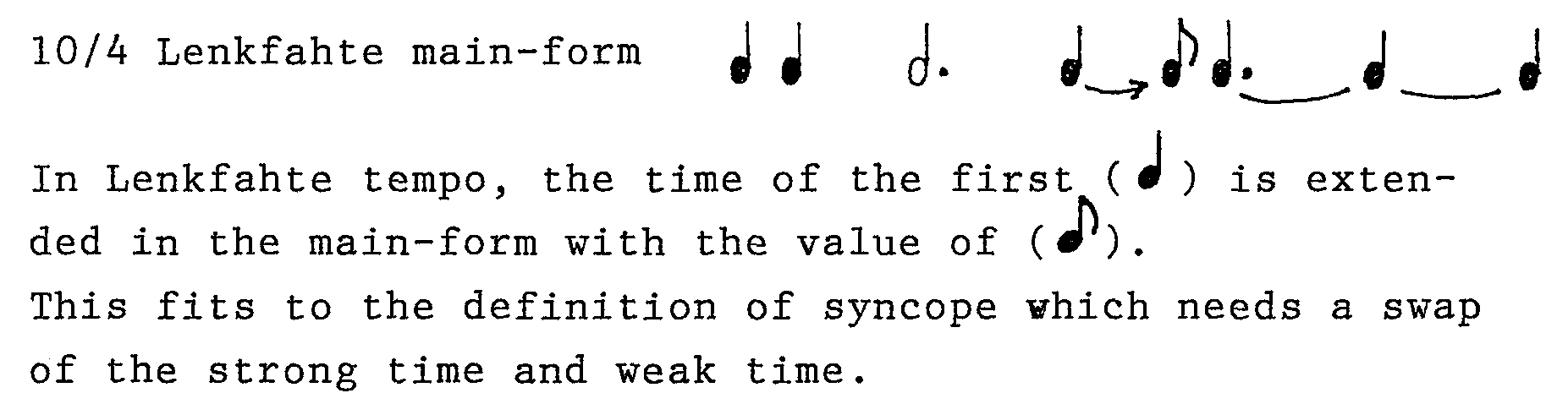
Rhythm, melody and form are 3 important factors in music. A resemblance between Turkish music and classi cal Turkish poetry (Divan şiiri) can be considered com paring melody and rhyme, rhythm and meter of prosody, forms of Turkish music and forms of Turkish poetry. Our composers, before composing, have been defin ing variaty, mode, tempo and form. Building a relation between tempo and syllables of text of music, they have been constructing a main form. This main form indicates the coincidence of syllable characteristics and length of tune. In the selection of type of tempo-, form and music part, they have been regarding this main-form. The Lenkfahte tempo has been analysed in this point of view and a complete agreement to this main-form has been revealed. In the main-form construction text of music meter has no importance. As a result, the compositions in this study are not sequenced according to their composers birth dates, text of music meters or modes, instead, form and types are considered for the compositions same form or form type their composer's birth dates are regarded. To define the classical approach, all composers, studied here, have a birthdate before 1900. 24 Lenkfahte compositions belonging to 14 compos ers are analysed and the results are follows: 1- 20 of 24 Lenkfahte compositons are in "Nakış beste" and 4 are in "Murabba" forms. 2- The entry to these compositions is with "AH" or "ES" with a valve of 1 unit of time. 3- In these compositions the second stage of Lenkfahte tempo (10/4) is used. 4- Text are related with sweetheart. (viii)5- Text are in 6 different meter of prosody. The length of verses of meter of prosody used in compositions are : 19 14-syllabled, 4 16- syllabled, 1 15- syllabled. 6- Lenkfahte Murabba ' s are composed fitting to "Murabba" form. 7- In Nakxs Lenkfahte' s variaty of form is obser ved. - 8- In Lenkfahte Murabba and Nakış, the main-form is as follows: - Main-form: 10/4 1+1+3+ 1§+3| | 1+1+4+4 The 2- measured structure of main-form does not indicate that it has 20 unit of times, because, thare are Lenkfah te Murabba' s or Nakış' s with an odd-numbered sum of mea sure. 9-The syncope in Lenkfahte compositions: 10/4 Lenkfahte tempo Ü 0» 9 0 İ i Düm Tek Düm Tek Te Ke 10/4 Lenkfahte main-form J J J J J^J, J i in Lenkfahte tempo, the time of the first (. ) is exten ded in the main-form with the value of ( d ). This fits to the definition of syncope which needs a swap of the strong time and weak time. Syncope has always the same place in both Lenkfahte tempo and Lenkfahte main-form, that causes limping tune. 10- In the Lenkfahte Murabba' s 1st, 2nd and 4th verses have the same tune. 3 verse has a different tune other than 1st, 2nd and 4th verses. (ix)11- In the 9 of 20 Nakış Lenkfahte compositions 1 beyit (2 verse) has an inner difference in melody. Only 1 has an entry of 1 verse. 12- In 1 Nakış Lenkfahte composition the composer has used tempo transposition. THE DESCRIPTION OF LENKFAHTE TEMPO - Considering the number of unit of times in this tempo, it is counted as short tempo, however, the 2 stage (10/4) have always been used in compositions. - Has a different type of beat. - Has a meaning of " Crippled pigeon". - "Tek" beats are longer than "Dlim" beats. As a consiquence of this "Tek" beats are stronger than "Düm" beats. - This tempo consists of 2 semai1 s (A tempo with 3 unit of times) located between 2 nim sofyan's (A tempo with 2 unit of times). Unit of times and beats: 2 3 12 11 Düm Tek Düm Tek Te Ke Tempo notes according to their stages: 10/8 10/4 f J- t> J f J> Düm Tek Düm Tek Te Ke r j. r j r j Düm Tek Düm Tek Te Ke (x)- No evidence has been for the usage of this tempo in military or religious compositions. - Lenkfahte tempo has been used only Murabba and Nakış forms. The main difference between Nakış and Murabba compositions is that Nakış compositions have only two sec tions instead of four. When Nakış compositions are analys ed two rifferent forms appear. In the first variation which we can call full "Nakış" forms, the first and second sections are the same. In the second variation, -which we can call "mi- yanlı nakış", the first and second sections are different. These two forms present some further variations, as follows First form: a) 1. verse -. *.-u *.-u t j- with the same melodies 2. verse Refrain (Terennüm) 3. verse Bend-i sani 4. verse with the melodies of verses 1 and2 Refrain b) 1. verse 2. verse with the same melodies Refrain 3. verse Bend-i sani with the melodies of verse 1 4. verse Bend-i sani with the melodies of verse 2 (xi)Second Form: a) 1. verse with the same melodies 2. verse Refrain (Terennüm) 3. verse miyanhane 4. verse with the melodies of verse 2 b) 1. verse. ^,,.,-,.. -. ?,. ' with different melodies 2. verse Refrain 3. verse miyanhane 4. verse with the melodies of verse 2 c) 1. verse..,,. ~_. ^,. with different melodies 2. verse Refrain 3. verse miyanhane 4. verse with a different melody. In "Murabba" compositions we find forms with refrains and forms without refrains. But Nakış can't be without refra ins, as it has gained it's importance due to the refrains. Nakış compositions, with respect to character, are lighter than Murabba compositions. The rythms used in Nakış compositions are follows: Muhammes, Hafif, Devr-i Revan, Fer, Ağır Düyek, Düyek and Lenkfahte. The composer who used the most extensively the Lenkfahte rythm is Zekai Dede. There are contemporary composers, such as Okyay Yiğitbaş, Cinuçen Tanrıkorur, Ruhi Ayangil, using this tempo, prov ing that it still lives.
Author
Dr. A.feridun Öney

How to Cite
A.feridun Öney (Proficiency in Art Thesis). The Distinctive specifications of Lenkfahte beste, 1993, Istanbul Technical University.
Figures & Images (290)
License
Tüm Hakları Saklıdır
This work is shared under the specified license terms.
More theses from Istanbul Technical University
- Investigation Of Stretching Effect With Mixed Finite Element Formulations For Laminated Beams And Plates(2023)
- Classification of anemia using data mining methods: An application(2015)
- Removal and recovery of platinum group metals through anode slimes of moebius electrolysis(2015)
- A study of design approaches to Istanbul's city halls based on space syntax theory(2015)
- A II. German Empire project: From Kaiser Wilhelm Monument to German fountain(2015)
- Uzaktan algılama verilerinin yersel ölçümlerle entegrasyonu ile toprak tuzluluk haritalaması; Aşağı Seyhan Ovası, Adana, Türkiye(2015)