
Crack problems of nonlocal elasticity
1991
0 views
0 downloads
Advisor: Prof.dr. Esin İnan
Abstract (EN)
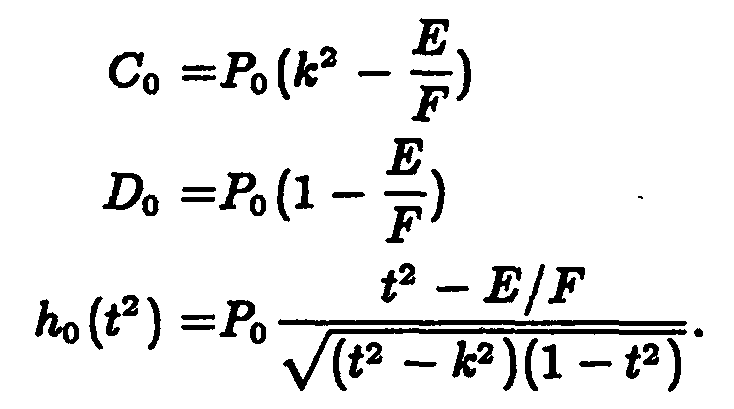
SUMMARY CRACK PROBLEMS OF NONLOCAL ELASTICITY In the present work, the problem of two collinear cracks in an isotropic, homogeneous elastic medium which is subjected to uniform shear loading at infinity is investigated in the context of nonlocal theory of elasticity. Crack problems are investigated by many authors. Among many others, Griffith's [1, 2] works are of great importance. Classical elasticity solution of problems predicts a stress singularity at the crack tip no matter how small the applied load is. The major discrepancy that exists between experimental obser vations and the theory led Griffith to propose his celebrated fracture criterion which results from equating the elastic energy to the surface tension energy. The past half century registered many other advances in this field. They are mostly influenced by the idea of Griffith. But the problem basically remained unresolved until recently. Eringen [25-27] gave a solution of this problem by solving nonlocal field equations which take into account long-range influences between the particles. Fundamental Equations of Nonlocal Elasticity Taking into acount the long-range influences, the constitutive equations of linear, homogeneous elastic solids are given as tu = /(A'err(s%, +2n'tkl{x'))dv{x'). (l) Here, it is considered that the nonlocal moduli are to be distributions with bounded supports. They are positive functions in a finite domain about x and vanishing outside of this domain. In the limit when these distributions become "Dirac delta " function, equations (1) reduce to the classical form of the constitutive equations of local elasticity. The form of A' ( |x ' - x |) and tf ( |x ' - x |) may be determined by matching the dispersion relation of the plane waves by its corresponding relation known from lattice dynamics. Among several possible curves the following has been found very useful to describe the nonlocal elastic moduli as (A',M') = (A,mH|x'-x|). (2) Here A and fi Lame' constants and a(\x' - x |) is an attenuation factor which brings the influence of the strain field in the neighbouring direction and sub-jected to normalization condition /a(|x'-x|)aV = l. (3) Jv Substituting equation (2) into equation (1) we find *«« /«(fe'-sIKi*1. W Jv Here a'kl is given by the classical Hooke' s law °i< = °ki (£') = ** (£') = 0. (8) Jv J6v Formulation of the Problem In this work a problem of two collinear cracks in elastic plane which is subjected to a uniform anti-plane shear load İs considered. Thus, we consider an elastic medium in the {xx = x, Xa = y) plane weakened by two line cracks each of length \b - c\ along x axis. Since the anti-plane shear loads are acting, the only non-zero displacement component of the displacement vector is uz. Then we may write ux = uy = 0, uz = W(x, y). (9, a-b) Thus, the non-zero stress components are dW dW "n.. °*z = fi-Q^ oVz = P-Q-- (10,o - 6) viTo obtain the field equations we may substitute the equations (10, a- b) together with the equation (5) into the equation (8) and write lij J a(\x' -x\,\y' -y\)V"W{x\y')dx'dy' - J ° a(|x' - x|, |y|)[«r,. (x',0)]dx' - J° a(\x' - x|, \y\)[avz (x',0)]dx' = 0. (11) This is the only field equation of the present problem. Here, brackets in the last two terms indicate the jump at the crack line. As it is known the displacement field possesses the following symmetry condition. W{x,-y) = -W(x,y) (12) Using this result in (11) we find that {ayz[x',0)]=0. (13) By this result the line integral in (11) vanishes. Now, taking Fourier transform of equation (11) with respect to x* we obtain the following differential equation ^-WU) = a (14) Here superposed bar indicates the Fourier transform of the related function. The boundary conditions of the problem are W(x,0)=0 0c (15, a -d) W{x,y)=0 (x2+y2)1/2->oo. The solution of equation (14) for y > 0 satisfying the boundary condition (15, d)is W{x,y) = (-)1'2 r A(e)exp(-ft,)cos(£x)de. (16) t J0 Here, the unknown function A(£) will be determined by using the remaining three boundary conditions (15). The non-zero stress components of the stress tensor for two dimensional medium may be written by considering the consti tutive equations given by expression (4) as follows tx, = I f" a(|x' - x|, \y' - y\)amg (x1, y')dx'dy' ;r ;r (17, a -6) t«* = / / "{W - x\> W - y|K,(x',y') 1 /' Jo '0 where we have introduced = f,f=fc,£=2^ 'k=\ Ve Po V 7T /i Now, we define a new function ÜT(??) as JST(ef) = er/c(£f). (24) Here e is a nonlocal parameter and characterizes the nonlocal effects. The func tion K(e$ ) becomes one for the limit case which is e = 0, and then the equation (22) characterizes the corresponding problem in local theory. To determine the unknown function A(ç) we must solve the triple integral equations (22). For this purpose we write A[$) = C1 J h{t2)sm{çt)dt. (25) viiiIt can be easily shown that equation (22, c) is satisfied identically by the sub stitution of (25) into the equation (22, c) and by noting the integral J~ r l sin(tf) «»(«)* = 1 1 j* j < \ (26) On the other hand, equation (22, a) gives us the following conditional equation / h{t2)dt = 0. (27) The remaining equation (22, b) may be expressed as / h[t2)K1{s,t)dt=^P{s) k"M'2) (33) R=0 IXand substituting it into the equations (32) and (27) and rearranging gives us Wfc -FZ^--**w »-0,1,2,... fc<« i- (35) Since P(s) is a known function, integral equation (34) can be solved succesively. It is also possible to apply Hilbert transformation to this equation. Solution may be given in the following form h f1*\- 2 £-£ /2 fl 1~^_ /2sRMds +. Cn n = 0,1,2,--. Here, unknown constant Cn can be calculated by considering condition (34, 6) as _ 2 /y-*ya., yy-*» 1/a*iu«)ifa (37) n = 0,l,2,.-- where P is the complete elliptic function of the first kind. It is also possible to write hn (*2) in the form of (38) Here For constant loading we write P(s) = P0. For n = 0 we find 4?. (39) C"=P"(*'-|) Z>0=P0(l--) (40,a-c) P /io(t2)=Po «_.» t*-E/F y/{t2~k2){l-t2)'Here E is the complete elliptic function of the second kind. For n = 1 we write Rı{y) = - f ho {u2)K2 (y, u)du. (41) * Jk Substituting expressions (40, c) and (30) into equation (41) gives Rjy) = - / -, }- t Jk y/{u2 - k2){l - u2){u2 - y2) (42) Introducing I(t2) as im = f1 1(y - mU/y) - (*8 - v)Rı{t2)]dy m K } A> v/(i-*/)(y-*2)(y-*2) we obtain h(t2\- 1 rh,2m^ x r1 (i - «) *(*)<** i M* } ~ "^d-*8)^-*3)11 " J ( } " ^ A. W(i-')('-*2)J " (44) Similar calculations can be done for n = 2, 3,.... It is observed that the func tions ho{t2) and hQ(t2) + hx{t2) are approaching to each other for decreasing value of the parameter e. For e = 0, we find ht (t2) = 0. Thus we may conclude that hi (t2) denotes the nonlocal effects which appear when 6^0. Stress Analysis Most important part of the problem is the determination of the stress distri bution in the neighbourhood of the crack tip. For this purpose we write y = 0 in equations (18) and (19) U-.0) = -f \[ £?£ " f h(t2)K2(s,t)dt) (45) where Us,0) = v/f^. (46) To find the solution for local theory we write e = 0 in equation (45) *,. 2 [lth(t2)dt, fc " " (47) 2 fl th{t2)dt kk°>=!/ *i^ s>1 XICalculations can be carried out by writing n = 0 in equations (36), (38) to obtain ko(t2). Using obtained result in equation (47) and rearranging gives us Do 0l. y/{l - S2)(fc2 - S2) As it can be observed from expression (48) that the values of stress go to infinity for the approaching values of 5 to fc and 1. But this is not possible for pratical problems. To determine the stress state at the tip of the crack, we use the concept of stress intensity factors which are given simply as Nk= lim \/(* -«)£,. (a, 0), N, = lim y/{a - l)t",{s,0). (49, o -6) t-*k~ a- »1 + For the present problem calculations give us n 2 * fM _ ıe\ f yp^dy - 1D i fc *y/2k(i-k>f }h V(i-y2)(y2-^2) 2,50a_b) * =-, x id - ^ f, yP{y)dy + 1*]. We find the corresponding solutions of particular case which is P{y) = P0 = constant y/2k(l - k2) [F J' ^2(1 -fc2)1 F1 v ' Another particular solutions may be obtained by writing fc = 0 for unique crack. After some mathematical manipulations we arrive Pa ty,(s,0) = -r=(* - Vs2 - 1) 5 > 1. (52) V « - 1 Similar result for a crack which is subjected to anti-plane uniform loading at infinity may be calculated as tuz(s,0) = -^L=,>1 (53) V 52 - 1 and the stress intensity factor at crack tip is ^^=a0V^ (54) Xllwhich is a very well-known result as Griffith criterion. To find the stress distribution for non-local case, we may use the result given for local case by equation (40, e) and substitute this form of ho(t2) into the equation (45) to obtain U«,0) Zf/1 *2-F l|(,,f]m( ('-*)', Po îTVfc y/[t2-k2){l-t2){t2-S2) + (*-.) exp(-{i±İ£)]]d*} 0 < « < k -pT-*{Jk V(*2 - *2)(i - *)(* - *2) [ " » [(a + ° "»<" g"* + (t-5)exp(-i^)]]dt} a>l. (55, o -6) The value of the stress at the crack tip for unique crack can be calculated simply by writing k = 0 in equation (55, 6) which gives U«,0) Jf [' ~ *[(« + «) «q>(-^-) - (« - 1) exp(-^-)]]* 1. (56) Numerical calculation have been carried on for several values of parameter e. It is observed that the maximum stress occurs at the crack tip but it is finite as it is expected. It is also possible to obtain the known classical solution by considering limit case which e tends to zero. As the last step of this work, we shall give the stress analysis of the crack problem by taking the function h(t2) as the sum of two functions namely ho(t2) and ht (t2). To this end, we write k = 0 in the equations (40) and (44) and define following functions aM = {a+^^-ûfi^j+a-^^-î^îE,.,} (57) Tjtf,. 1 f1 r^~G(y,, u G(y,u)du Then we write y2 (58) M*2) + *» (t2) = ;^=[i - £(*W - »(1 + *i («»))]. (59) Here F('2) = /' \/wIiEl (1 " V) " ^ (<2)]dy' Substituting (59) into the equation (45) and writing k = 0 gives us *,.(a,0)_ 1 f1 rT"[l - H^(0 - «"(I + R1(t))})G{s,t)dt P0 2rrJ0 Vl-t t-«a (60) XlllNumerical calculations have been carried out for different values of c and it has been observed that the obtained results are very close to the ones found in the first step of the problem. The difference between the results due to two solutions goes rapidly to zero by increasing value of the distance of the point under consideration to the crack tip. Stress intensity factor at the crack tip may be given as [26] feM=* e« (61) a0 y/e 20c y ' Using (56) and (60) we find for c = 1/100 c3 = -0.30. (62) Now we may conclude following results: 1: Maximum shear stress occurs at the crack tip and it is finite. 2: The shear stress at crack tip becomes infinite as the atomic distance a tends to zero. This is the very-well known classical result. 3: When tyz (c, 0) = te (cohesive shear stress) fracture will occur and crack begins to propagate. In this case (61) gives trie = CG (63) where Co - (j^K. (64) Here, we have found the Griffith criterion by direct method. Cohesive shear stress te may be predicted by using the concept of surface energy 7 given by Griffith. Thus we write and equate this quantity to (64) to obtain *» = K.*,. (66) Here _ sp40 (67) Ke - W^' { ] Now considering the known values of 7 and the elastic constants for steel [26] as 7 = 1975CGS, fi = 6.92 x 10¹¹ CGS, u = 0.291, a = 2 ASA0 (68) we find -=0.1928736/?1/2. (69) Assuming that, in n atomic distance, x - na, the nonlocal effects attenuate to %1 of its value at x = 0 from (7) we find 0 = 2.145966/n. (70) For n = 6, we have - = 0.1153. (71) H This value is found as 0.14 by Eringen [27]. Our result is closer to the result given by physicists and metallurgists based on other considerations. For instance, Kelly [53] gives this result as 0.11 which may be regarded as a perfect agreement. xiv
Author
Dr. Kamil Oruçoğlu

How to Cite
Kamil Oruçoğlu (Doctorate thesis). Crack problems of nonlocal elasticity, 1991, Istanbul Technical University.
Figures & Images (114)
Keywords
License
Tüm Hakları Saklıdır
This work is shared under the specified license terms.
More theses from Istanbul Technical University
- Removal and recovery of platinum group metals through anode slimes of moebius electrolysis(2015)
- Investigation Of Stretching Effect With Mixed Finite Element Formulations For Laminated Beams And Plates(2023)
- Classification of anemia using data mining methods: An application(2015)
- A study of design approaches to Istanbul's city halls based on space syntax theory(2015)
- A II. German Empire project: From Kaiser Wilhelm Monument to German fountain(2015)
- Uzaktan algılama verilerinin yersel ölçümlerle entegrasyonu ile toprak tuzluluk haritalaması; Aşağı Seyhan Ovası, Adana, Türkiye(2015)