
 indexli
Deciphering the relationship between post-traumatic stress and eating behaviors in adolescent individuals: The case of Antakya on February 6th
2026
113 sayfa
2 görüntülenme
1 i̇ndirme
Danışman: Dr. Öğr. Üyesi Hilal ŞAHİN
Özet (EN)
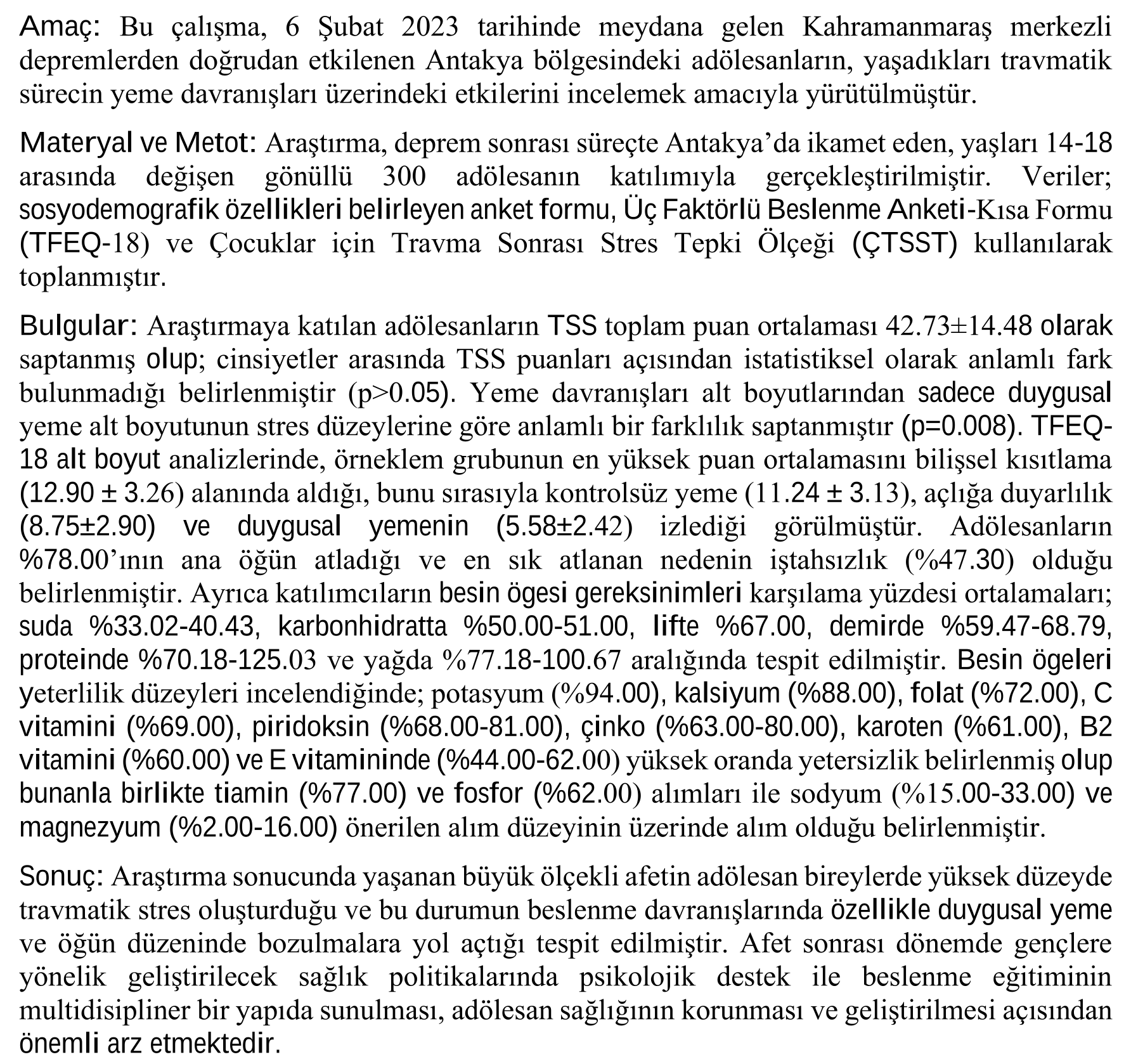
Purpose: This study was conducted to examine the effects of the traumatic experience on the eating behaviors of adolescents in the Antakya region, which was directly affected by the Kahramanmaraş-centered earthquakes that occurred on February 6, 2023. Materials and Methods: The research was conducted with the participation of 300 volunteer adolescents aged 14-18 residing in Antakya following the earthquake. Data were collected using a survey form determining sociodemographic characteristics, the Three-Factor Eating Questionnaire-Short Form (TFEQ-18), and the Child Posttraumatic Stress Reaction Index (CPTS-RI). Results: The average total TSS score of the adolescents participating in the study was found to be 42 Dec 73±14.48; it was determined that there was no statistically significant difference between the sexes in terms of TSS scores (p>0.05). Among the sub-dimensions of eating behaviors, only the emotional eating sub-dimension showed a significant difference according to stress levels (p=0.008). In the TFEQ-18 sub-dimension analyses, it was found that the sample group received the highest average score in the field of cognitive restriction (12.90±3.26), followed by uncontrolled eating (11.24 ±3.13), hunger sensitivity (8.75±2.90) and emotional eating (5.58±2.42), respectively. It was determined that 78.00% of adolescents skip a main meal, and the most common reason for skipping is loss of appetite (47.30%). Additionally, the average percentage of participants' nutrient requirements met; it was found December 33.02-40.43% in water, 50.00-51.00% in carbohydrate, 67.00% in fiber, 59.47-68.79% in iron, 70.18-125.03% in protein and 77.18-100.67% in fat. When examining nutrient adequacy levels; high levels of deficiency in potassium (94.00%), calcium (88.00%), folate (72.00%), vitamin C (69.00%), pyridoxine (68.00-81.00%), zinc (63.00-80.00%), carotene (61.00%), vitamin B2 (60.00%) and vitamin E (44.00-62.00%) it was determined that the intake of thiamine (77.00%) and phosphorus (62.00%) with dementia, as well as sodium (15.00-33.00%) and magnesium (2.00-16.00%) was above the recommended intake level. Conclusion: As a result of the research, it has been determined that the large-scale disaster experienced creates a high level of traumatic stress in adolescent individuals and this leads to disruptions in eating behaviors, especially emotional eating and meal patterns. In the health policies to be developed for young people in the post-disaster period, the presentation of psychological support and nutrition education in a multidisciplinary structure is important for the protection and development of adolescent health.
Kurum
Bu Yayına Nasıl Atıf Yapılır
Rabia Yılmaz (Master Thesis). Deciphering the relationship between post-traumatic stress and eating behaviors in adolescent individuals: The case of Antakya on February 6th, 2026, pp. 1-113, Erzincan Binali Yıldırım University, DOI: https://doi.org/10.71008/ebyu.thesis.2026.257.
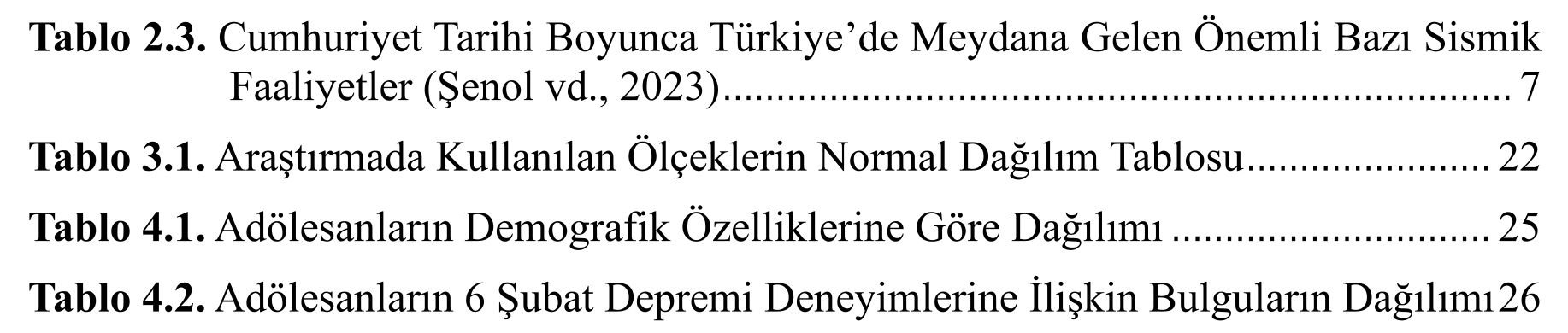
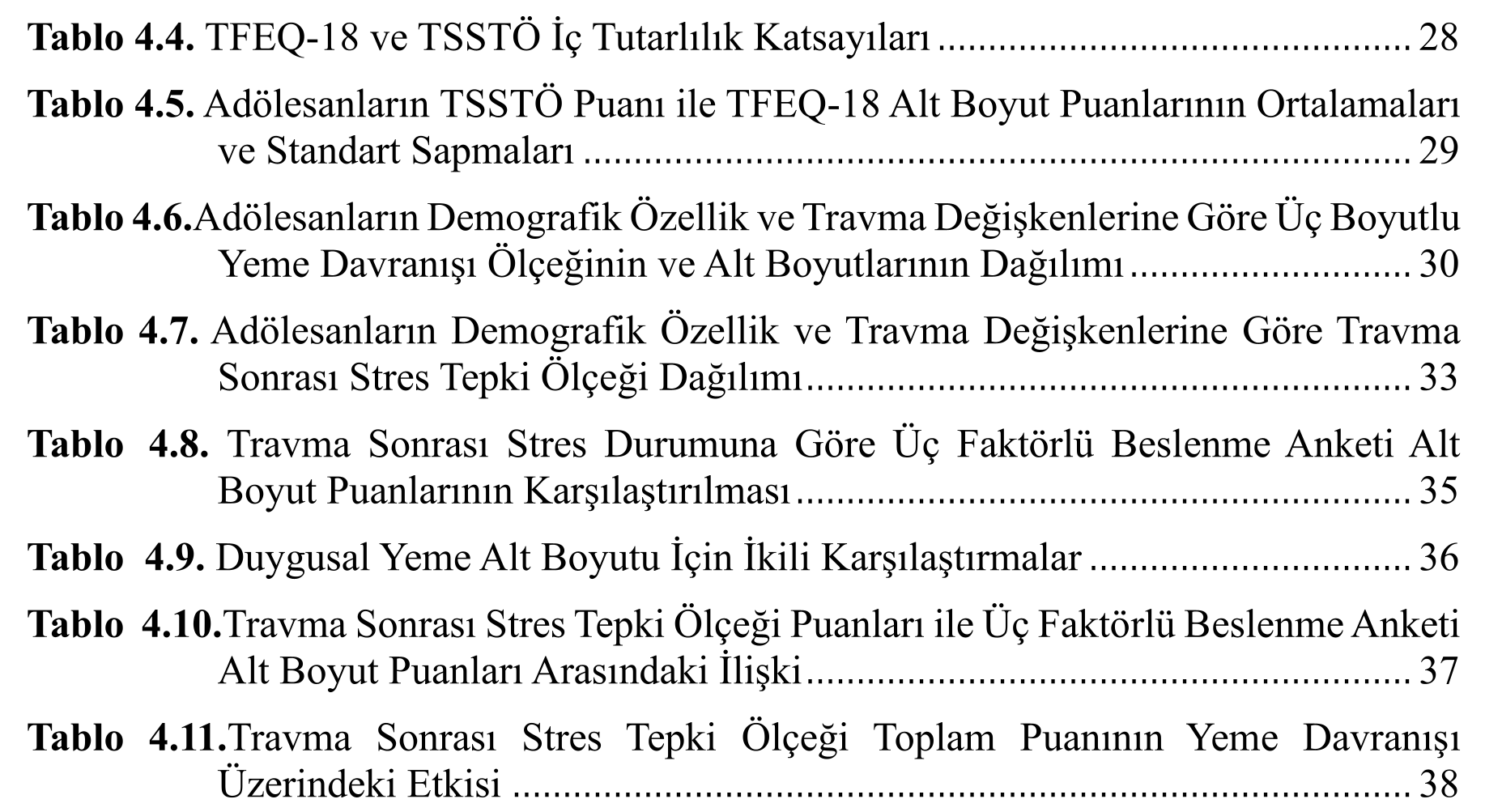
Şekiller ve Görseller (18)
Anahtar Kelimeler
DOI Durumu
Talep Edildi
İnceleniyor
Onaylandı
DOI Atandı
DOI & Atıf Yap
Lisans
Tüm Hakları Saklıdır
Bu eser belirtilen lisans koşulları altında paylaşılmaktadır.
Erzincan Binali Yıldırım University tezlerinden daha fazlası
- Eksik(2022)
- From a Schmıttian perspective, ideological divisions and the state's efforts to homogenize society in 20th century Türkiye (2026)
- Investigation of structural behavior of corroded RC columns(2020)
- The effect of peer mathematics anxiety on students’ mathematics anxiety and achievement(2026)
- Bayburtlu Ağlar Baba Divanı's contextual index and functional dictionary(2025)
- YAPAY ZEKA VE PROGRAMLAMA: ÖĞRETMENLERİN PROGRAMLAMA ÖZ YETERLİLİKLERİ, YAPAY ZEKA FARKINDALIKLARI VE EĞİTİMDE YAPAY ZEKA KULLANIMINA İLİŞKİN GÖRÜŞLERİNİN İNCELENMESİ(2026)