
The Printing of cotton and cotton/polyester blended fabrics
1994
0 görüntülenme
0 i̇ndirme
Danışman: Doç. Dr. Habip Dayıoğlu
Özet (EN)
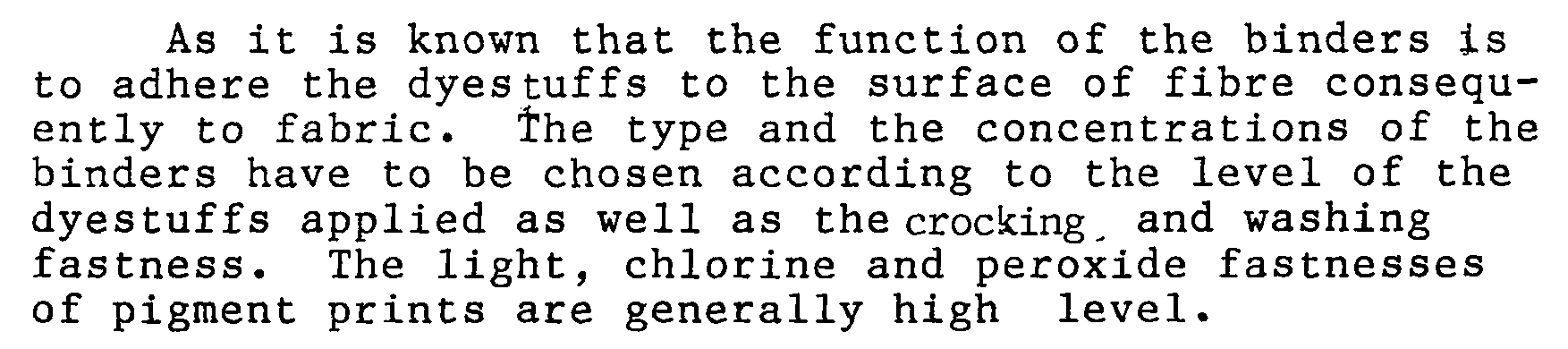
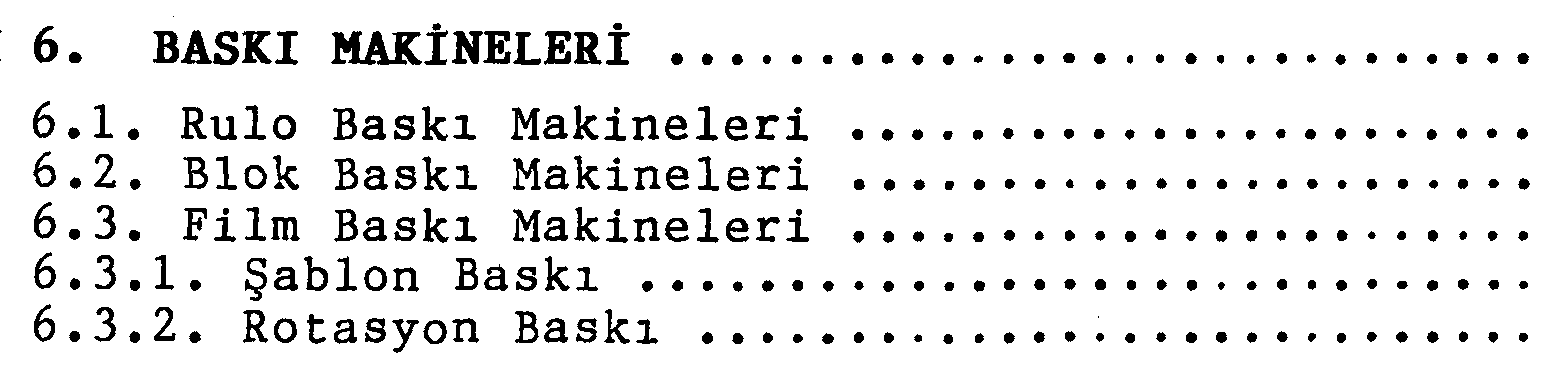
In this research work, printing of cotton/polyester and cotton fabrics is analysed. The printings concerning this research are accomplis hed in the light of the information presented here. The printed materials, then, have been undertaken through previous fastness tests and the results obtained then discussed. Before starting printing process, it is vital to detect fabric properties and the type of dyestuffs to be applied. The table below can be referred to as a referen ce listing the possible fabric-dyestuf f applications. (Table 1) The most prominent factor for differentiating the dyeing and printing processes is the dyeing process. The textile material is processed by a dye solution but for printing however, dye pastes with high viscosity are used. This points out the importance of the thickening materials to be used for printing. Thickeners are natural or synthetic materials that distributes the required amount of dyestuff homogeneously on textile material. Furthermore, the retarders provide various links between the dye and the fabrics. The classification of natural thickeners used in textile printing is shownon Table. 2. Bearing in mind the application methods, the physical and chemical properties of the thickeners and their costs, suitable ones ought to be choosen. viÜ Z p z S a» UJ r- X UJ H Z İ aH eo E H Z u as tu u. u. u CO < -I L) U. u. 3 H C/l u > Q co 3 g > a «e o. a. < (2 !.a 8 JO a.5 a. S x w x> 2 s a *'? o o zz tu CO co z z S 22 5 3 CO CO II II a 30 CO CO vııTable: 2. Natural Gums Used In Textile Printing Extraction Source Gum Name Trade Name Trees and shrubs Plant or tree seeds Seaweed Gum Arabic, Gum Senegal Gum Tragacanth and Gum Karaya Locust Bean gum Guar gum and starches Sodium alginate Carragheenan Gum Gatto and Cesal- piniagum (Cesalpina, Italy) Manutex (Alginate Inds.) and Lamitex (Protan, Norway) Irish Moss (Blandola, UK) NOTE. Gums based on solvent emulsions. Emulsion thickenings usually incorporate small amounts of a conventional thickening. The weight of dry pare the print paste o from product to produc chain length and the d thickening agent molec of dry.thickener are r ting thickening agents content. Conversely, dry thickeners are of thickening agent, required to pre- f the correct viscosity, varies t. This depends essentially on the egree of chain branching in the ules. Where relatively large weights eguired, as 8% and more, the resul- are described medium or high solids pastes made of with low content of low solids content. The relationships between high and low solid thicke ners are summarized in the table below (Table.3) Concerning ecological textile production, the choice of either binders or thickeners is also most vital. Besides the thickening agent, the binders used to pigment printing are also an important parameter in order to establish the right printing processes. VlllTable 3. THE INTERRELATIONSHIP BETWEEN LOW AND HIGH SOLID THICKENING PROPERTIES IXAs it is known that the function of the binders is to adhere the dyes tuffs to the surface of fibre consequ ently to fabric. the type and the concentrations of the binders have to be chosen according to the level of the dyestuffs applied as well as the crocking, and washing fastness. The light, chlorine and peroxide fastnesses of pigment prints are generally high level. In order to get better printing properties, other auxiliaries such as softeners, dispersants, emiilsifiers, wetting agents, catalysts and fixators are also impor tant parameters. An important difference between dyeing and printing is the machinary used. In printing process, high viscous dyestuff solutions which are known as printing paste are used. Printing machines can generally be classified. as screen., block and roller. The most selected parameter in order to use the printing process is its high production. In the experimental part of the research, hand screen printing is used. Prior to the applications a pattern is selected. According to the number of the colours required in the pattern, one screen for each colour is to be prepared. Using the pattern selected and the screens prepared, a cotton fabric is printed with reactive and vat dyestuffs and a cotton/polyester 33/67 fabric with pigment dyestuffs According to the dyestuffs used appropriate thicke ners are to be choosen. And- then the selected thickeners are to be mixed with the suitable dyestuffs. The prepared pastes are printed by using a hand screen table covered adhesive.After printing and curing, all printed fabrics are subjected to crocking, washing and light fastness tests. The highest values.of fastness to washing are obta ined by vat dyestuffs as a grade of 4/5 for specimens III and IV. The reactive dyestuffs gave the lowest values as a grade of 3 for specimen I and a grade of 3/4 for specimen II. The medium values are obtained by pig ment dyestuffs as a grade of 4 for specimen V and a grade of 4-5 for specimen VI. The highest values of fastness to wet crocking are obtained by vat dye stuffs as a grade of 3 for specimen III and a grade of 4 for specimen IV. The pigment dyes tuffs gave the lowest values as a grade of 1 for speci men V and specimen VI. The medium values are obtained by reactive dyestuffs as a grade of 2 for specimen III and a grade of 2 for specimen IV. The highest values of fastness to dry crocking are obtained by vat dyestuffs as a grade of 4/5 for specimen III and a grade of 4/5 for specimen IV. The pigment dyestuffs gave the lowest values as a grade of 2/3 for specimen V and a grade of 2 for specimen VI. The medium values are obtained by reactive dyestuffs as a grade of 4/5 for specimen I and a grade of 4/5 for specimen II. The highest values of fastness to light are obtained by vat and pigment dyestuffs as a grade of 5 for specimens III, IV, V and VI. The lowest values are obtained by reactive dyestuffs as a grade of 4 for specimens I and II, XI
Yazar
Dr. Yeşim Hacıarifkaptanoğlu

Bu Yayına Nasıl Atıf Yapılır
Yeşim Hacıarifkaptanoğlu (Master Thesis). The Printing of cotton and cotton/polyester blended fabrics, 1994, Istanbul Technical University.
Şekiller ve Görseller (96)

Anahtar Kelimeler
Lisans
Tüm Hakları Saklıdır
Bu eser belirtilen lisans koşulları altında paylaşılmaktadır.
Istanbul Technical University tezlerinden daha fazlası
- Investigation Of Stretching Effect With Mixed Finite Element Formulations For Laminated Beams And Plates(2023)
- Removal and recovery of platinum group metals through anode slimes of moebius electrolysis(2015)
- Tersine metabolik mühendislik yöntemi ile aluminyuma dirençli Saccharomyces cerevisiae eldesi(2015)
- Classification of anemia using data mining methods: An application(2015)
- A study of design approaches to Istanbul's city halls based on space syntax theory(2015)
- Evolution of timber construction systems in the second half of the 19th century in Istanbul: Rationalization of the traditional(2015)